Hi guys! I’m sorry for being lost for so long, but there is a reason for that, I’ve been working on a new and improved web page with my own domain that allows me to create better content for you; I just launched it and I will be so glad if you want to subscribe to the new site as I’m leaving this.
In the new page, I will be publishing weekly and right now, I’m preparing a special Iran travel guide, to inspire you to travel to this beautiful country.
Thank you for being so patient and supporting me from the beginning, I wait for you on my new page, you can check it out on this link:
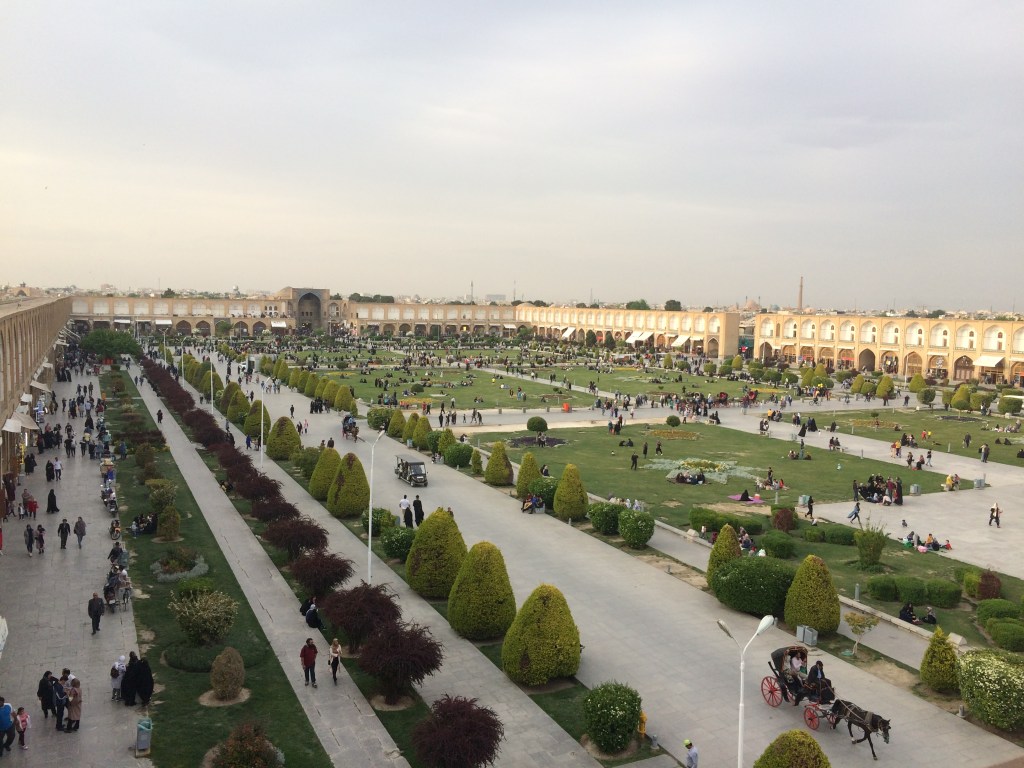
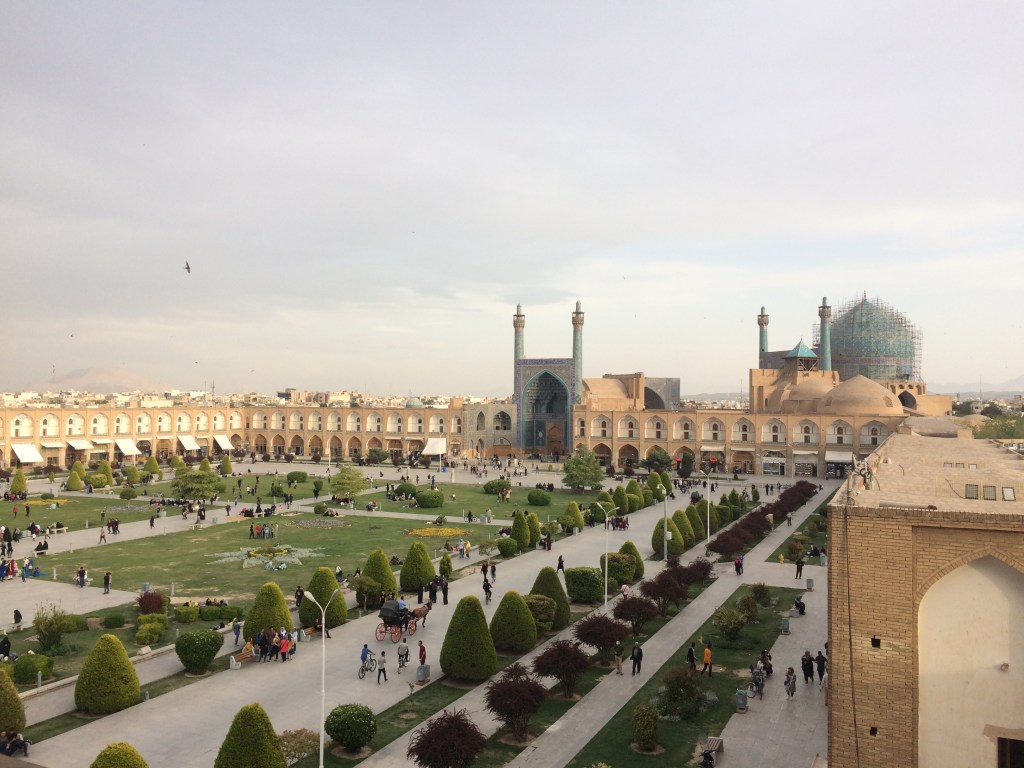
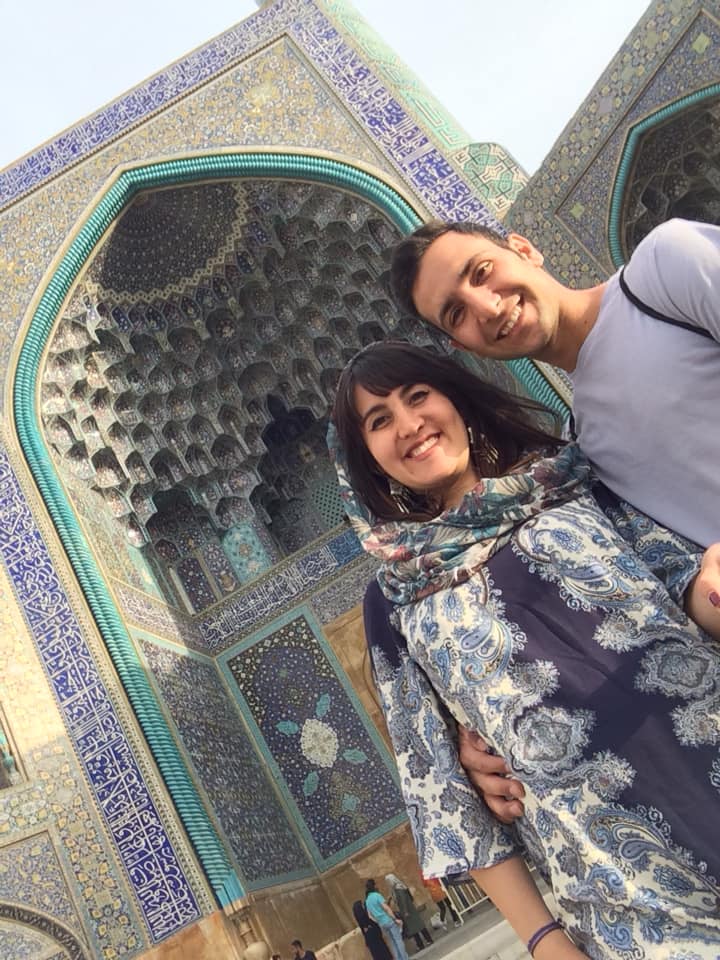
On the second day of our visit to Isfahan, we began the tour concluding the visit of the Naghsh-e Jahan square. The Shah mosque, at the south of the square, was the one missing from the day before, constructed in 1611; more than a mosque it is a complex with different buildings, like two religious schools and a winter Mosque around a square with a water pond in the middle.
When we got inside, it was praying time, so we saw how a man stands on a specific spot of one of the buildings to sing the praying call; the architectural characteristics of that single spot made a magical acoustic effect that permitted all people in the mosque to hear the call, regardless how far away they were; amazing experience.
Then, to take the last sight of the Naghsh-e Jahan square we took a ride on a horse carriage all around it, admiring for the last time each one of the buildings, I really didn’t want to leave the square but we still had a lot of places to see…
Therefore,
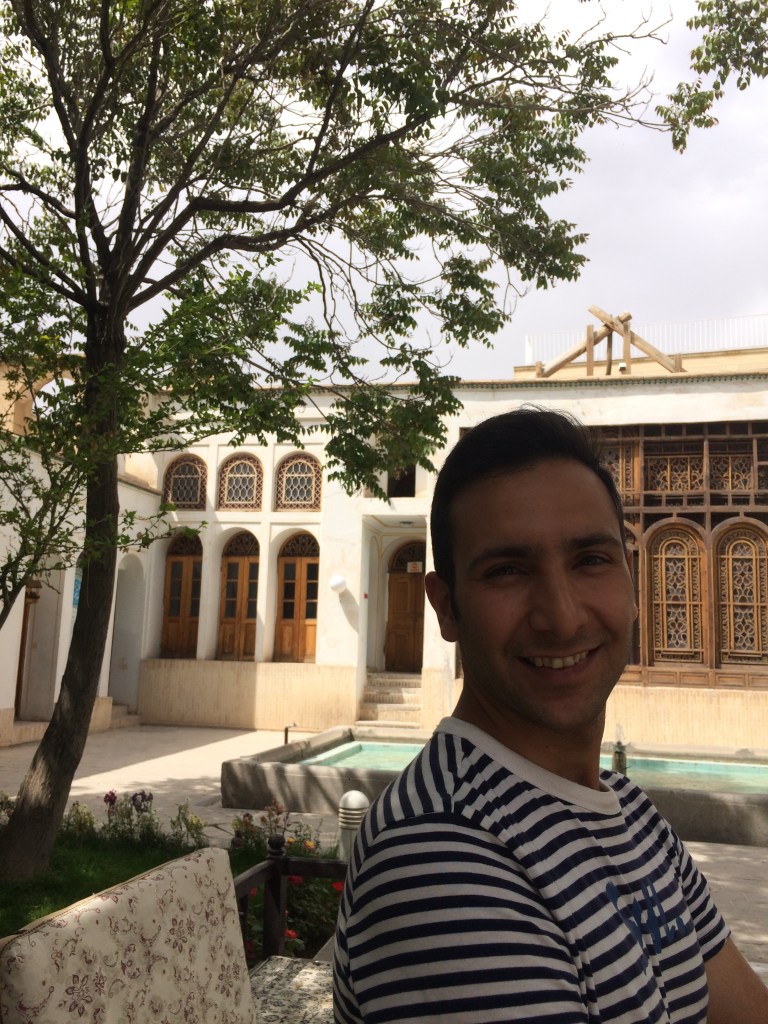
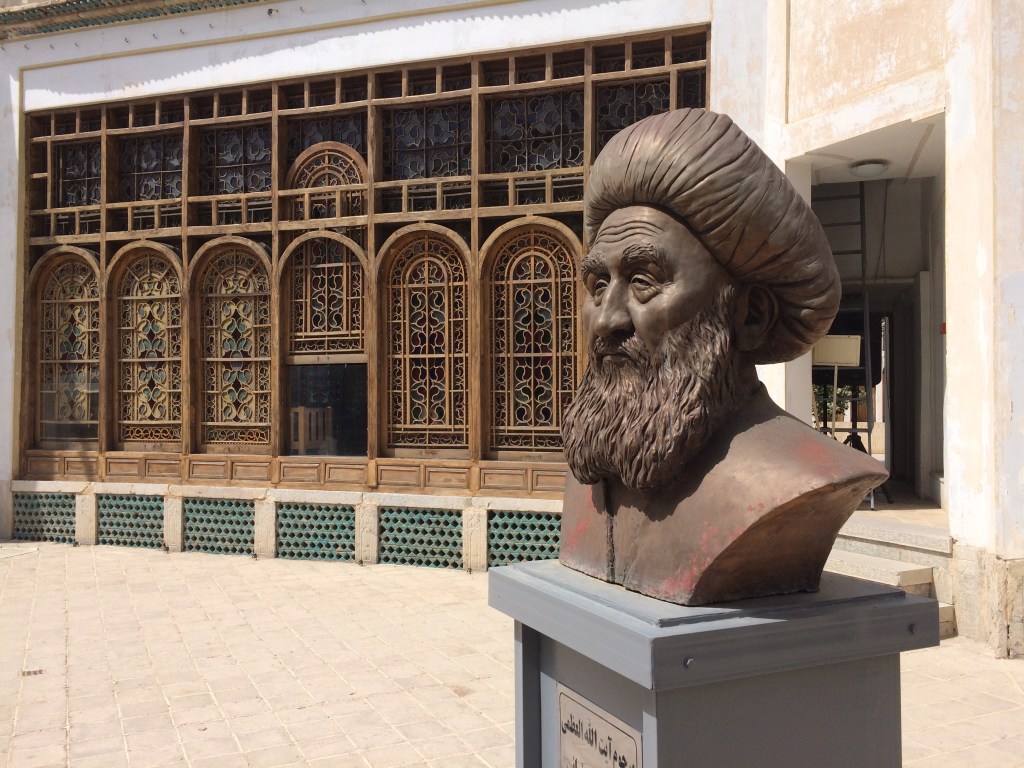
we walked to the next spot, the Constitution
House of Isfahan, a historical house that exhibits documents and
photographs from the period of the Persian constitutional revolution. Also
known as one of the first interfaith centers where Muslims
and Christians came to talk about their religions. ⠀⠀⠀⠀⠀⠀⠀⠀⠀
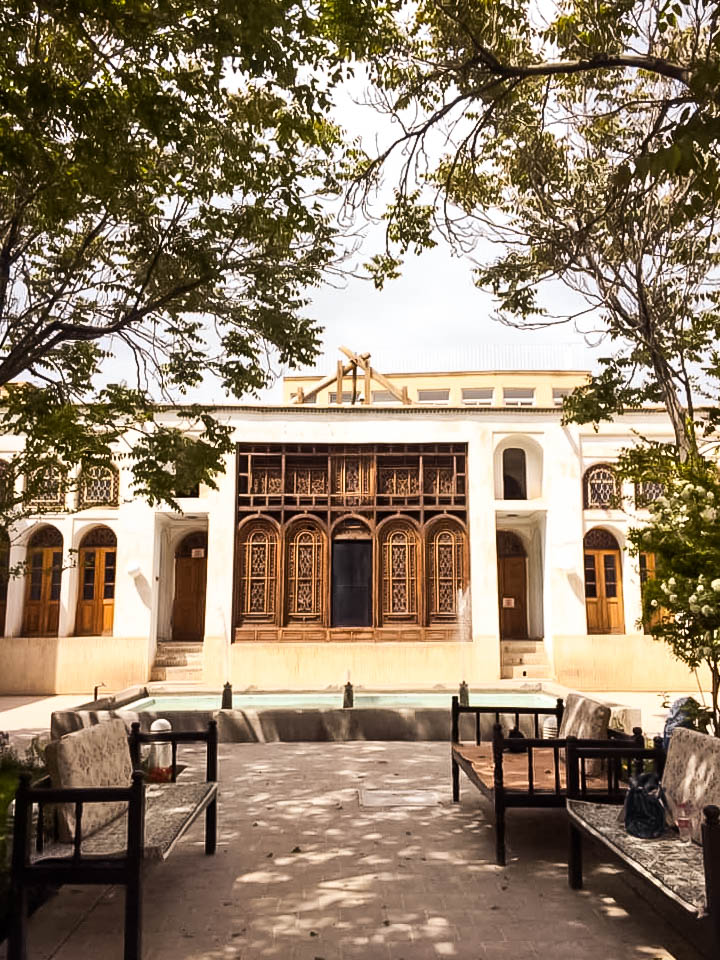
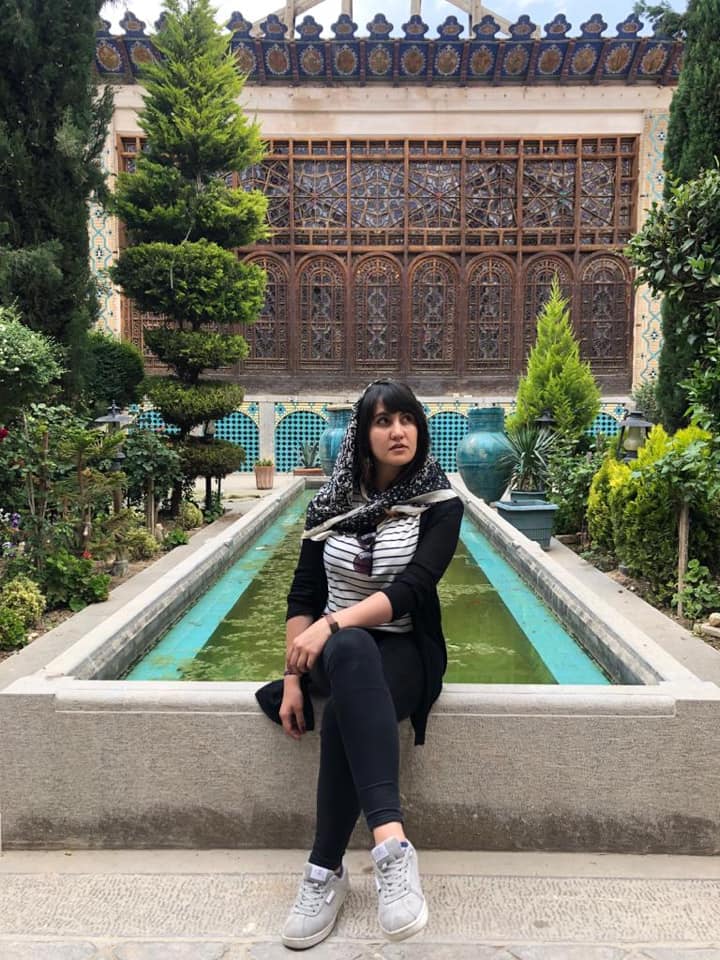
I was so amazed by the courtyards and the woodwork of the windows
that surround them.
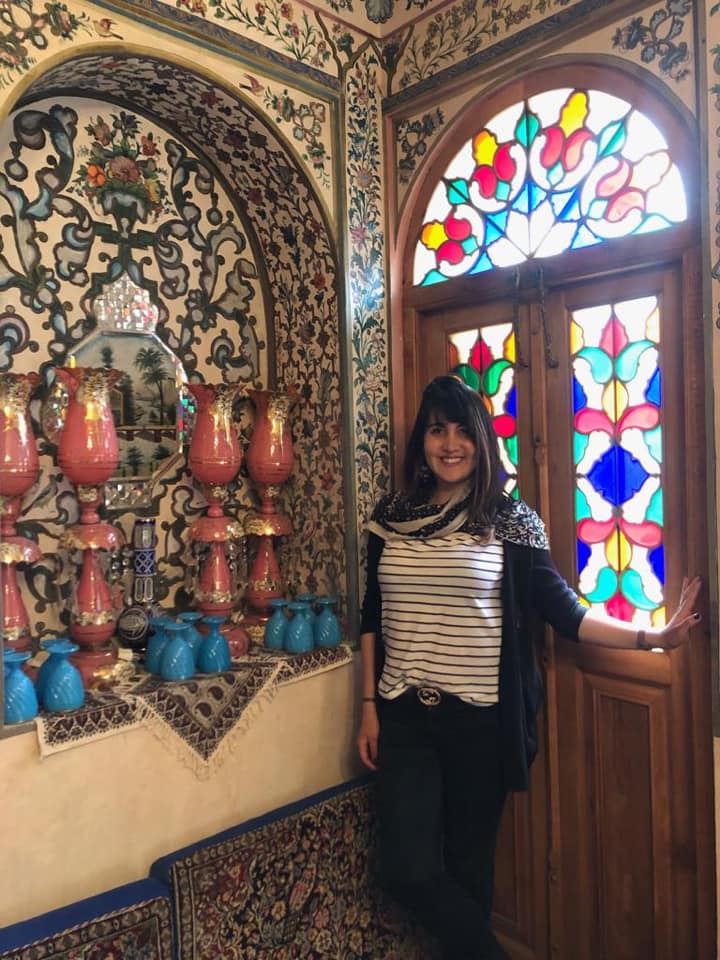
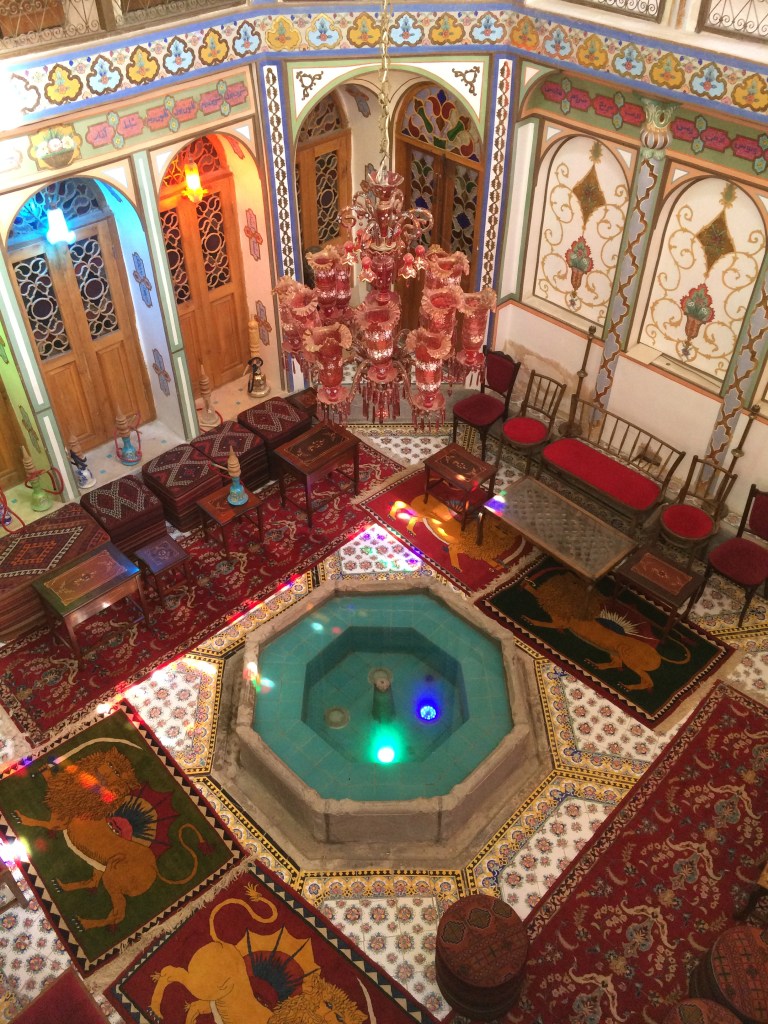
It is a common thing in Iran restoring historical houses and open them to the public; as the previous house, there was another one nearby at walking distance: the Mollabashi historical House, the most beautiful of all houses. This one had so many colorful and gorgeous details, it was mind-blowing seeing all those different designs on each room and on the inner courtyard.
The
most important feature of the house is how they play with light using color
glasses on the windows, color lamps on the big rooms and carved walls specially
designed for letting the natural light pass to the basement rooms.
This house is a must-see of Isfahan, but I recommend you to get there early as it gets crowded suddenly and you won’t be able to take good pictures.
Concluding
with the historical houses, we got back to the car to drive to the last monument,
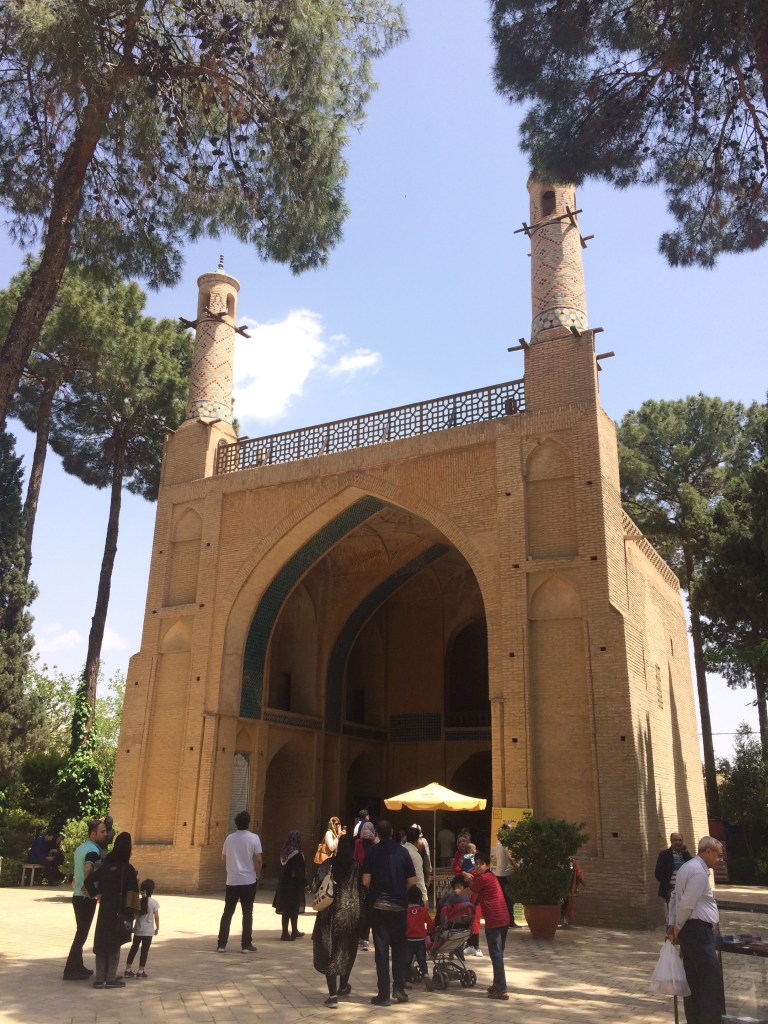
a little bit outside the city: the Menar
Jonban also known as the “shaking minarets”. Because the special
architectural characteristics of distance, ratio and high permits each tower to
move at unison with the other one when one of them is shaken.
Make
sure to get right on time to see the shaking show; we sadly took off before it
happened, but fortunately, we could see it from outside.
Our Isfahan tour has ended and as always we were starving, we didn’t realize that the lunchtime had passed by far, so it was so difficult to find food, as we were on the middle time between lunch and dinner, in which a lot of restaurants doesn’t offer food options. Thank god in our third restaurant attempt, when I was already getting grumpy, we found a heavenly Hamburger so we could finish the day happy and satisfied.
Hi guys! I’m sorry for being lost for so long, but there is a reason for that, I’ve been working on a new and improved web page with my own … Continue reading COMMUNICATION: NEW WEB PAGE
On the second day of our visit to Isfahan, we began the tour concluding the visit of the Naghsh-e Jahan square. The Shah mosque, at the south of the square, … Continue reading SIXTH STOP IN IRAN: ISFAHAN (DAY 2)
On the eighth day, we drove five and a half hours to arrive from Malayer to Isfahan, from all the eleven cities we visited in Iran this one was by far my … Continue reading SIXTH STOP IN IRAN: ISFAHAN (DAY 1)
On the eighth day, we drove five and a half hours to arrive from Malayer to Isfahan, from all the eleven cities we visited in Iran this one was by far my favorite. It was late and we were hungry so we stop on a restaurant along the way, it was a small place with nothing in particular but Oh my! It was the best Kabab I ever tasted, so flavored! I even learned how to eat it mixing pieces of bread, some leaves of mint and a little piece of meat; my boyfriend explained me, that they make only one type of food, so that’s why they become masters in that. After that, we arrived to our destination: a family friend house where we could recharge our energies for the next two days.
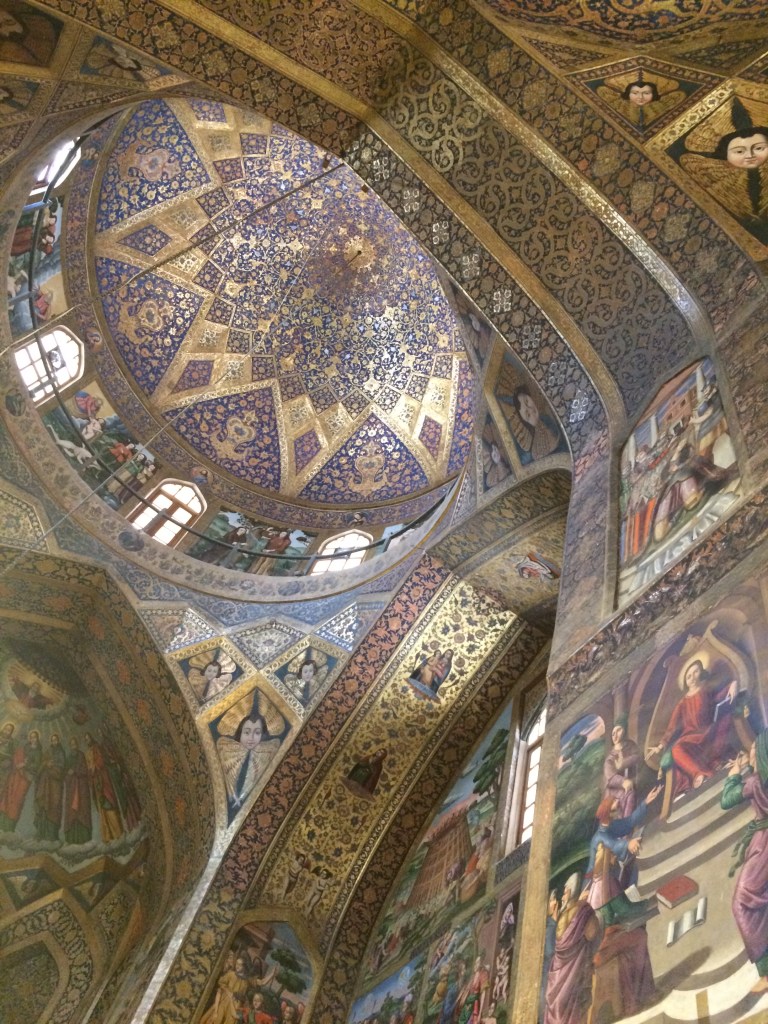
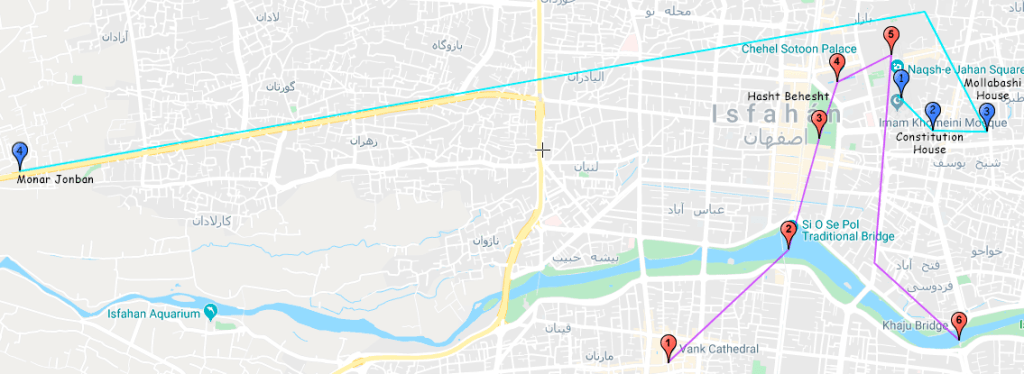
The next morning, we began the tour with Vank Church, a religious complex with a library, a museum and a cathedral that was built in 1606 by hundreds of thousands of Armenians that were forced to leave their home country during the Ottoman war. The interior of the church is covered by blue and gold frescos about the biblical story of the creation and the expulsion of the men from Eden. Other than the interior of the church, I was very impressed by an item exposed in the museum: a hair in which somebody had written with a diamond tipped pen a part of the bible, which was possible to read only by microscope.
“To know wisdom and instruction; to perceive the words of understanding”
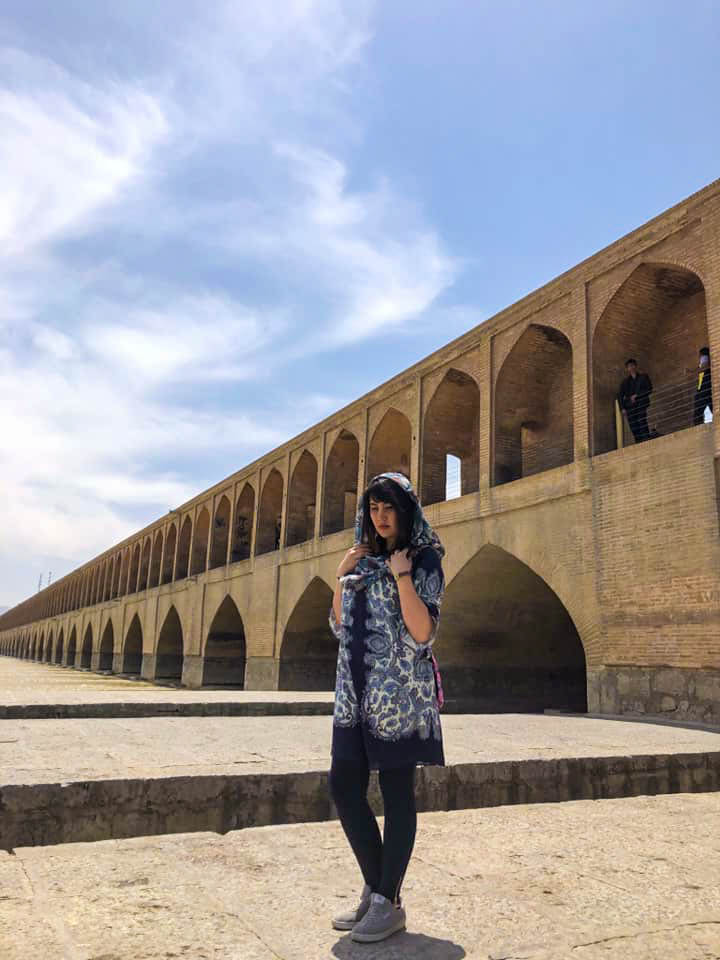
Second stop: Si-o-se Pol Bridge, its name literally means “33 arches” that are the number of arches that this bridge has, it is the largest between the bridges that cross the Zayanderud River and it is also a dam. If you remember, we had already seen the small version of it on the second stop in Iran at the Malayer Mini World.
The bridge is a popular recreational gathering place, several groups of friends settle down in the niches under it, to talk and pass the time with some shisha.
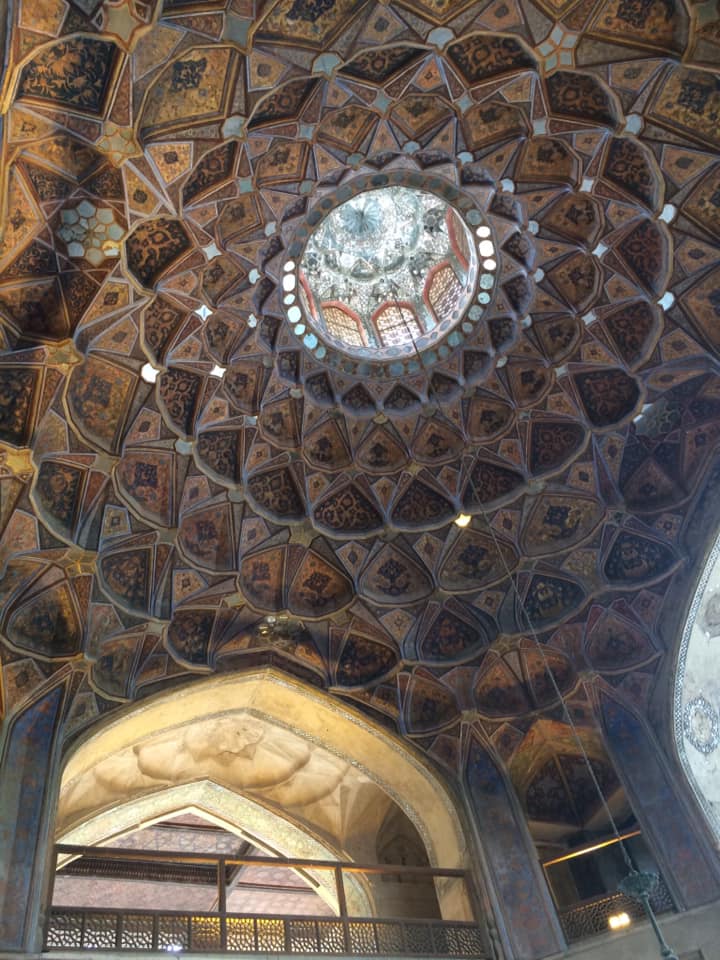
After a quick stop for eating lunch near the bridge, we drove to Hasht Behesht, a private pavilion built for the eight Shah of Iran. The name of the palace means “eight paradises” as a representation of the Islamic cosmology, seeing that incredible geometry, makes me believe that surely paradise must be something like that.
The best part was the astonishing
ceiling, geometrically designed with the “moqarnas chiseling” technique that
emulates a honeycomb.
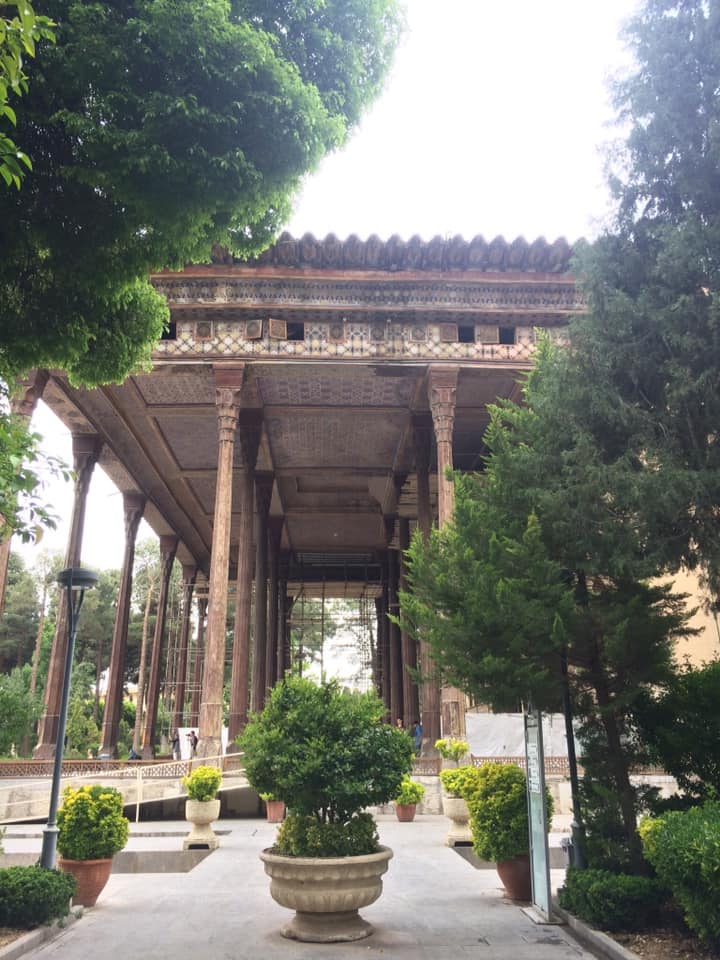
It turns out that we were near another
beautiful place, so we went by walking to Chehel
Sotoon Palace, another pavilion in the middle of a park at the end of a big
water pond. The Shah Abbas II used it for doing receptions and entertain others
dignitaries and ambassadors.
The name of this place has also a
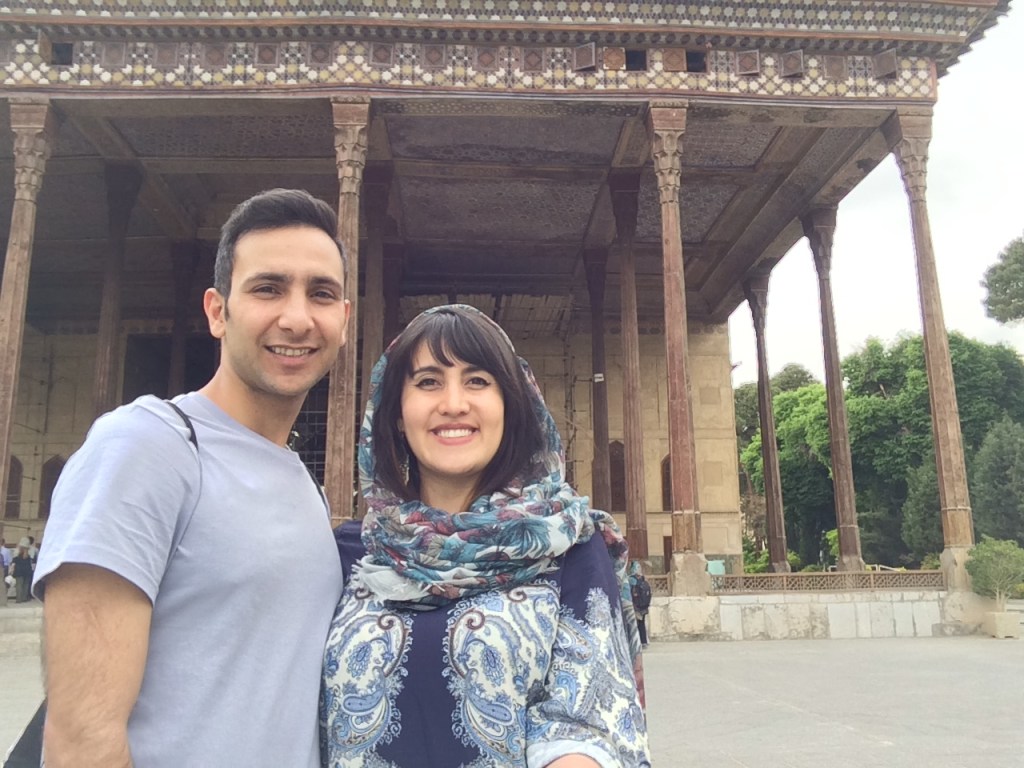
hidden meaning: “Forty Columns”. As you can see in the picture, the
entrance of the pavilion is supported by twenty columns; which getting reflected
in the water pond becomes forty.
Another amazing thing of this place
were the frescos in the inside ceilings that represents different battles.
Also in a walk distance, we could
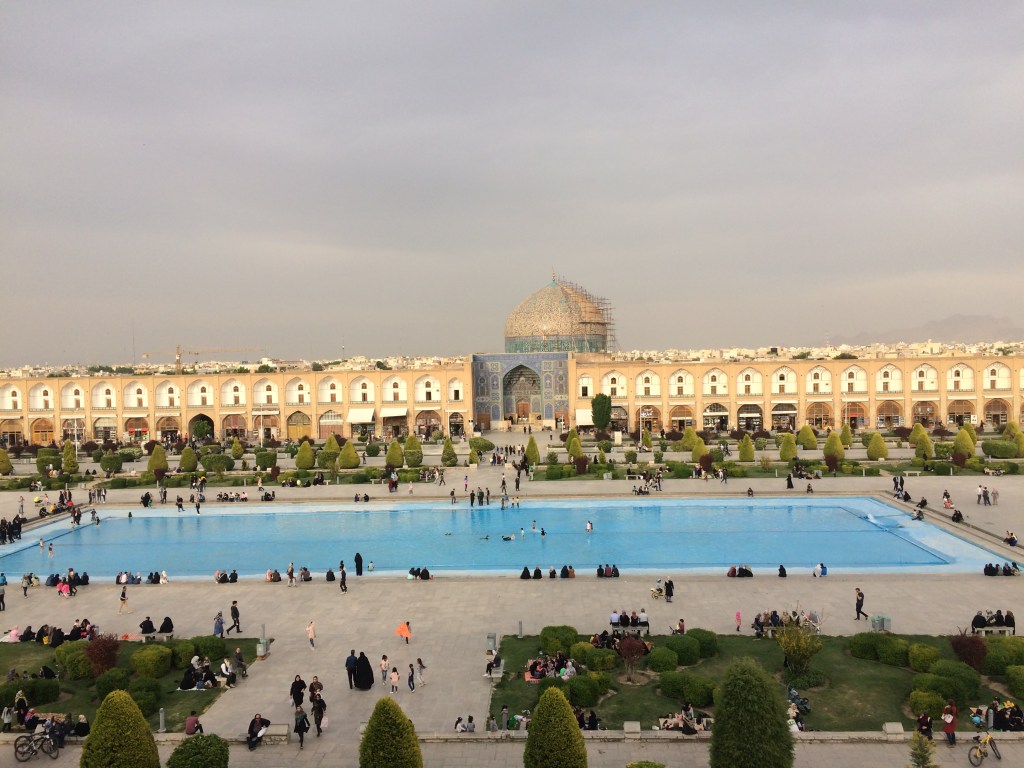
arrive to the next stop, my favorite place of the city: the Naghsh-e Jahan square, the biggest
square in Iran and one of the biggest in the world (89,600 square meters). Historical
buildings surround it and in the middle, it has a big water pond and green
areas. On the south, there is the Shah
Mosque, on west the Ali Qapu Palace,
on the east the Sheikh Lotf Allah Mosque
and at north the Isfahan Grand Bazaar.
It is the perfect place to buy your
Isfahan souvenirs as it is also delimited by shops with typical products; I
bought a little tiny carpet bookmark and some magnets.
Once we admired this beautiful square,
we wanted to enter to each one of the historical buildings, but it was getting
late so we only got to see three of them and left the last one as the first thing
to do the next morning.
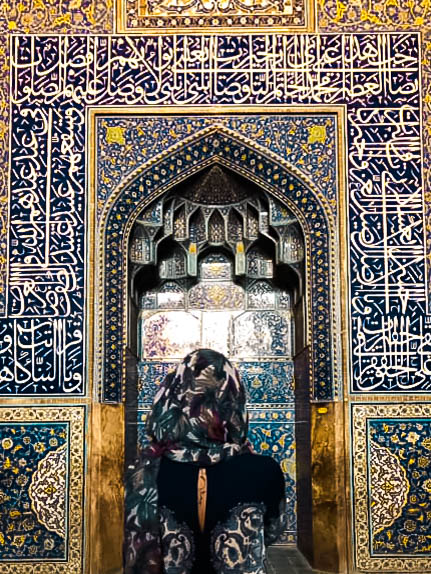
First one: the Sheikh Lotfollah Mosque constructed during the Safavid Empire in 1619 as a private mosque to the royal court. As soon as we entered, we saw this beautiful niche in the center of the back wall; it’s the Mihrab, the place where the Imamjome (a certified religious person) guides the prayer. Around it, the tiles signed the names of the 12 imams (the descendants of Mohamad).
The inscriptions on the others walls
recite poems by Shaykh Bahai who prays for the help of the immaculate
fourteen (Muhammad, Fatima, and the Twelve Imams). While the inscriptions
inside the dome emphasize the virtues of charity, prayer and honesty and the
correctness of Islam over other religions.
Second building of the square: the Ali Qapu Palace, we were so lucky with
this one. A group of schoolgirls was trying to enter with a guided tour, so we
joined them and managed to entered even if it was already closed, for free and
with a guide (it was in Persian but I had my personal boyfriend translator with
me).
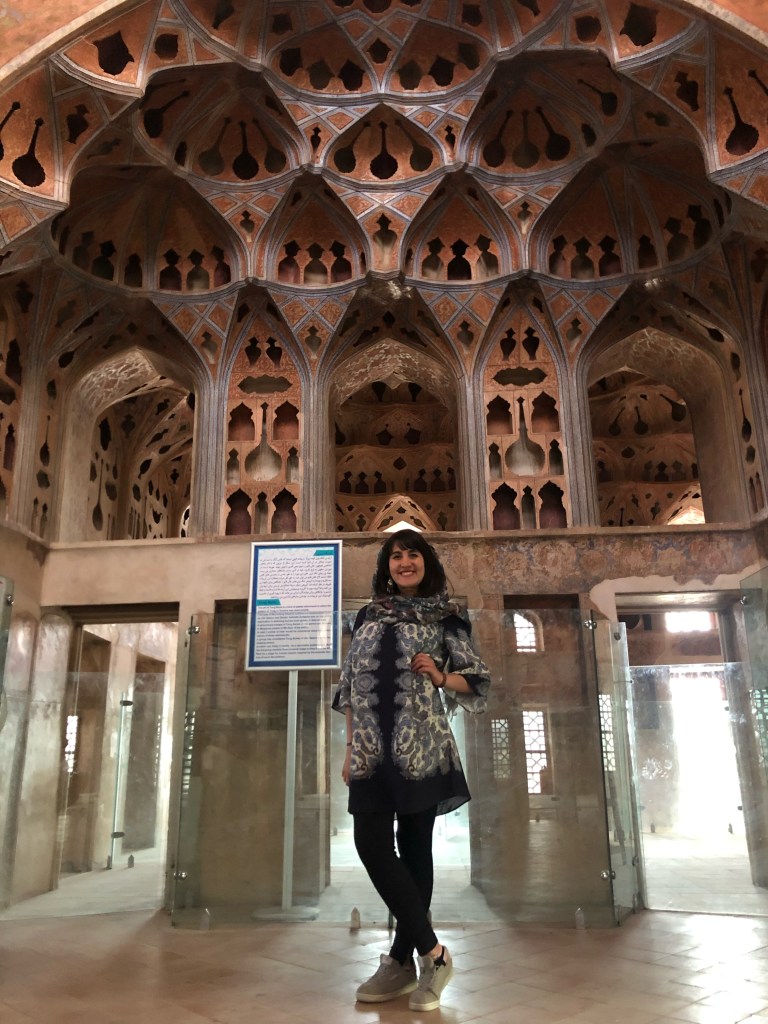
The name of this palace means:
“imperial gate” because of its vast portal in the main façade, used to
entertain noble visitors, and foreign ambassadors. It has six floors accessible
by a difficult spiral staircase; but arriving to the last floor is totally
worth it as you can appreciate the Music Hall (the one in the picture), the
design of the ceiling and walls improve the acoustic of the room.
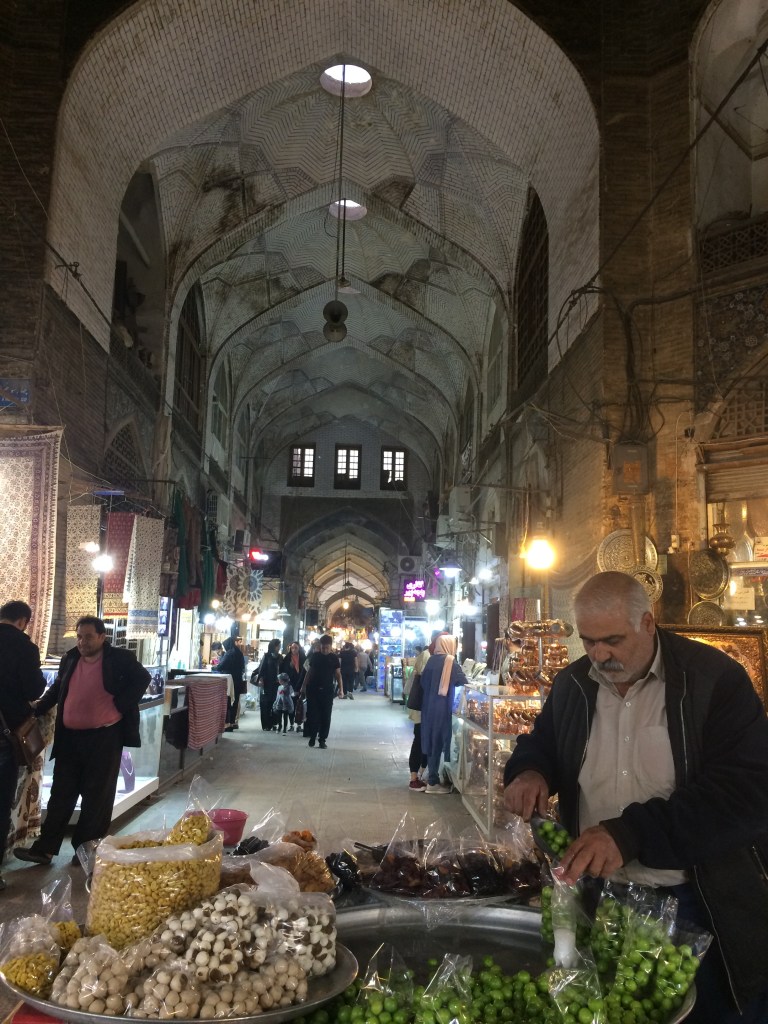
Third one: the Isfahan Grand Bazaar, built in 1620 is the longest covered market in the world, with a two-kilometer street that connects the old city with the new. Its main commercial activity is the selling of carpets and kilim; of you haven’t found your souvenirs yet, this is place won’t disappoint you, as you can find a lot of typical products.
We took
a walk inside and admired all those beautiful handmade creations, finishing our
square visit for the day; we eat a delicious corn snack nearby and headed to
the last place of our first day in Isfahan.
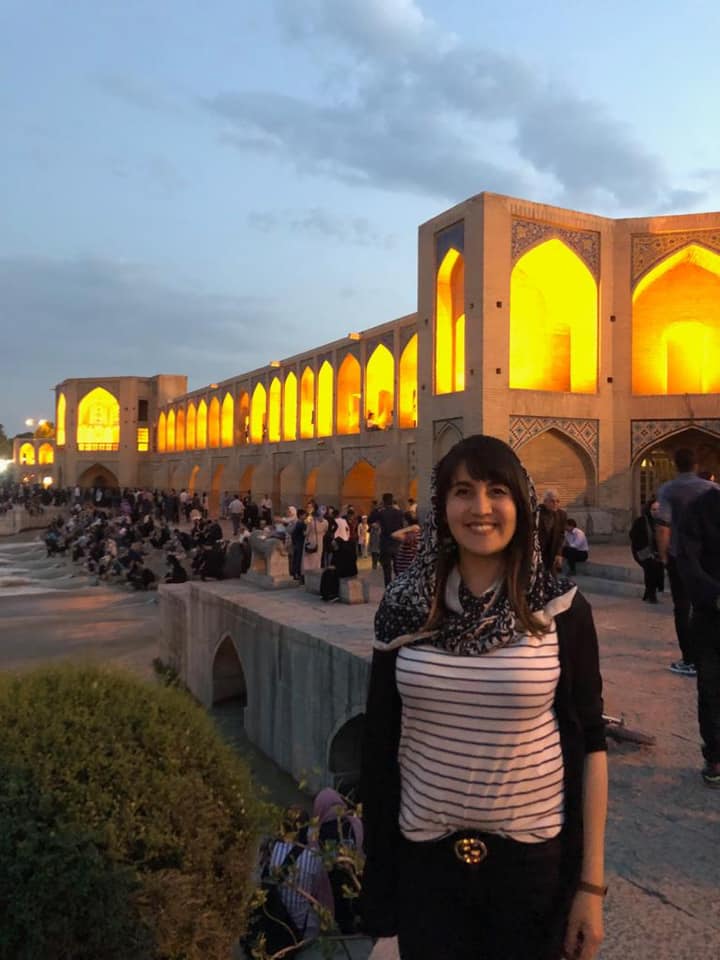
At last, a
little tired but still wanting to see the Isfahan amazing places, we arrived to
the Khaju Bridge, as the Si-o-se Pol
Bridge it also cross
the Zayanderud River and works as a dam; linking the Khaju
quarter with the Zoroastrian quarter.
What I enjoyed
the most about this bridge was that at night the people gathers under the arches
to sing Persians songs, it was a beautiful experience, even though I couldn’t understand
the words, the rhythm just got inside me. A perfect closure for the first day
in a majestic city.
PS: This picture
is really from the second day, but we liked this Bridge so much that we decided
to come back on the next day.
Hi guys! I’m sorry for being lost for so long, but there is a reason for that, I’ve been working on a new and improved web page with my own … Continue reading COMMUNICATION: NEW WEB PAGE
On the second day of our visit to Isfahan, we began the tour concluding the visit of the Naghsh-e Jahan square. The Shah mosque, at the south of the square, … Continue reading SIXTH STOP IN IRAN: ISFAHAN (DAY 2)
On the eighth day, we drove five and a half hours to arrive from Malayer to Isfahan, from all the eleven cities we visited in Iran this one was by far my … Continue reading SIXTH STOP IN IRAN: ISFAHAN (DAY 1)
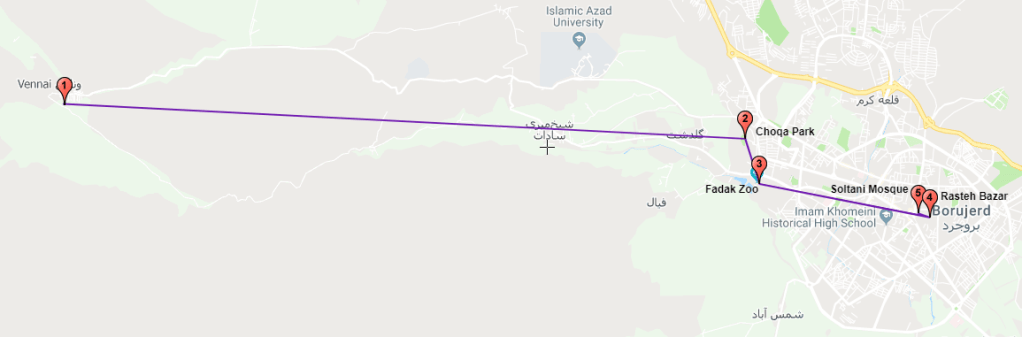
On the fifth day, we made a day trip to Borujerd (is one hour by car from Malayer); two things we had in mind for absolutely doing in this city: search for a particular egg-shaped hat, made of sheep’s wool, for my boyfriend’s dad (read below to know how it went) and trying the famous Borujerd ice cream.
We left home almost at lunchtime, so the first
order of the day was to find a place for lunch. It was perfect to start here,
because on the outskirts of Borujerd (just before entering the city) there is a
place called Vennai. It is
located on high ground, so it is perfect to go in summer since the temperature
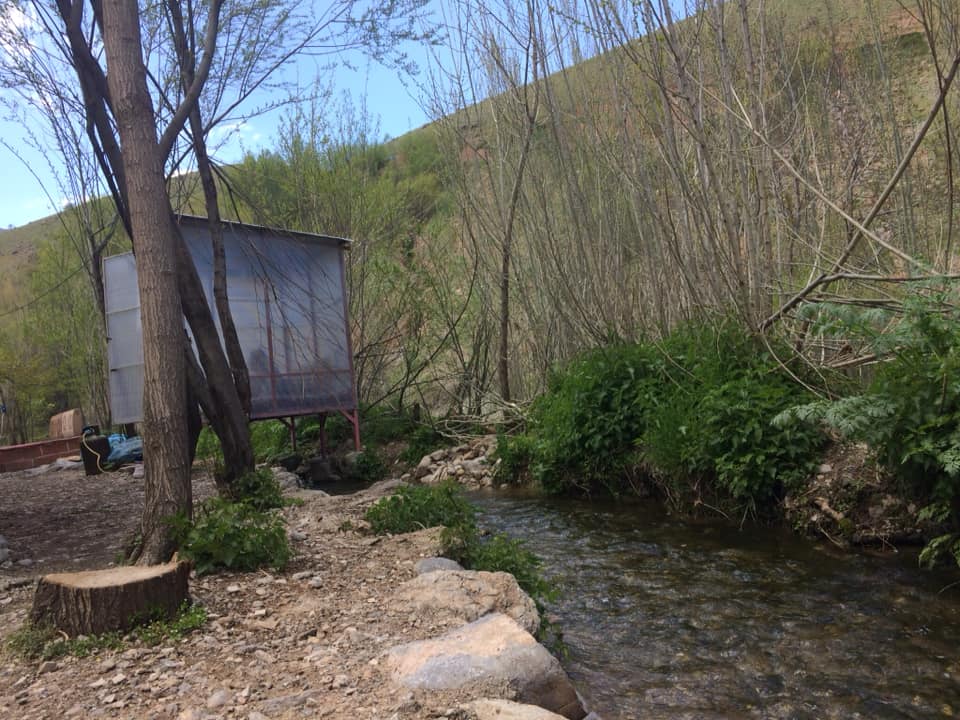
is lower; you can choose between having a picnic or selecting one of these cute
beautiful cabins over the river where you can seat on a Persian carpet, eat a
kebab with yogurt and smoke shisha. A typical, calm and lovely spot that I totally
recommend.
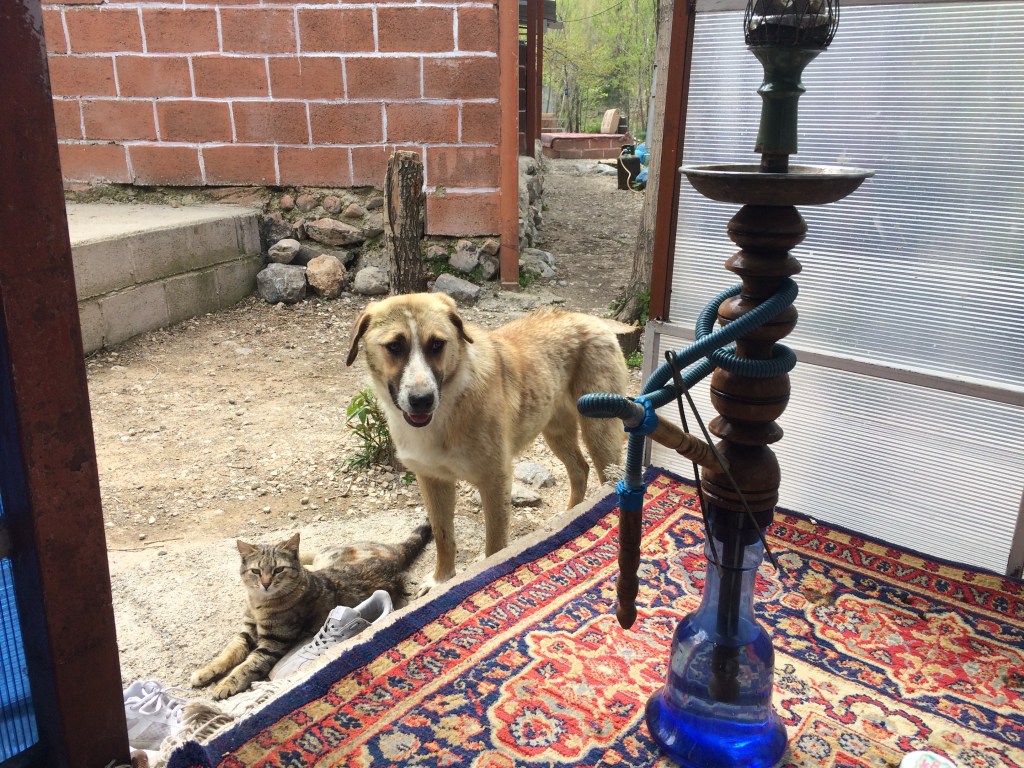
While we were eating, we also made two cute
little friends, a cat and a dog, they were so respectful, never got inside the
cabin, just staring at us from the outside; but they made us felt guilty so we gave
them some food at the end. The cutest thing was that they were friends, so the
dog always left a piece of food for the cat to eat. I’m a crazy cat lover, so I
always enjoy when there’s some fluffy cat around.
Choqa Hill
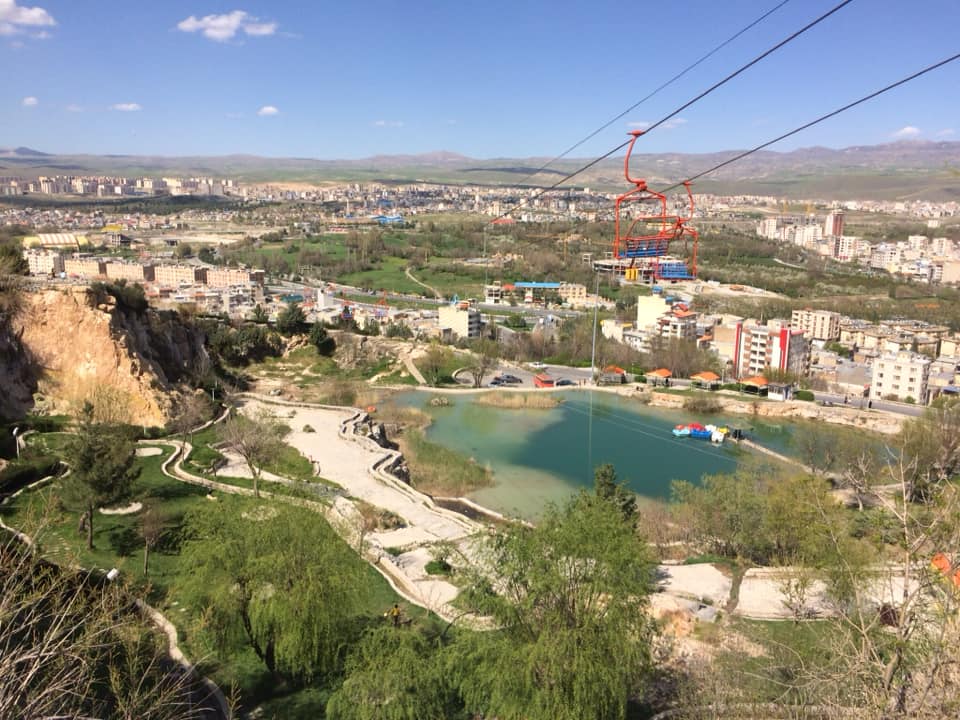
With our stomachs full and happy, we went to the highest place in town, just in the entrance to the city: Choqa Park Hill, from where we were able to appreciate the whole city and a beautiful lake in the middle of the park beneath us. For visitors it’s also possible to arrive at the low ground of the park and go up with a cable seat. Going down and really nearby there’s another park with a zoo inside: Fadak Zoo, this was our third stop, we saw different kind of birds and other animals but at the end, I felt sad when we saw a lonely monkey with a sad face, at that point we decided to go somewhere else.
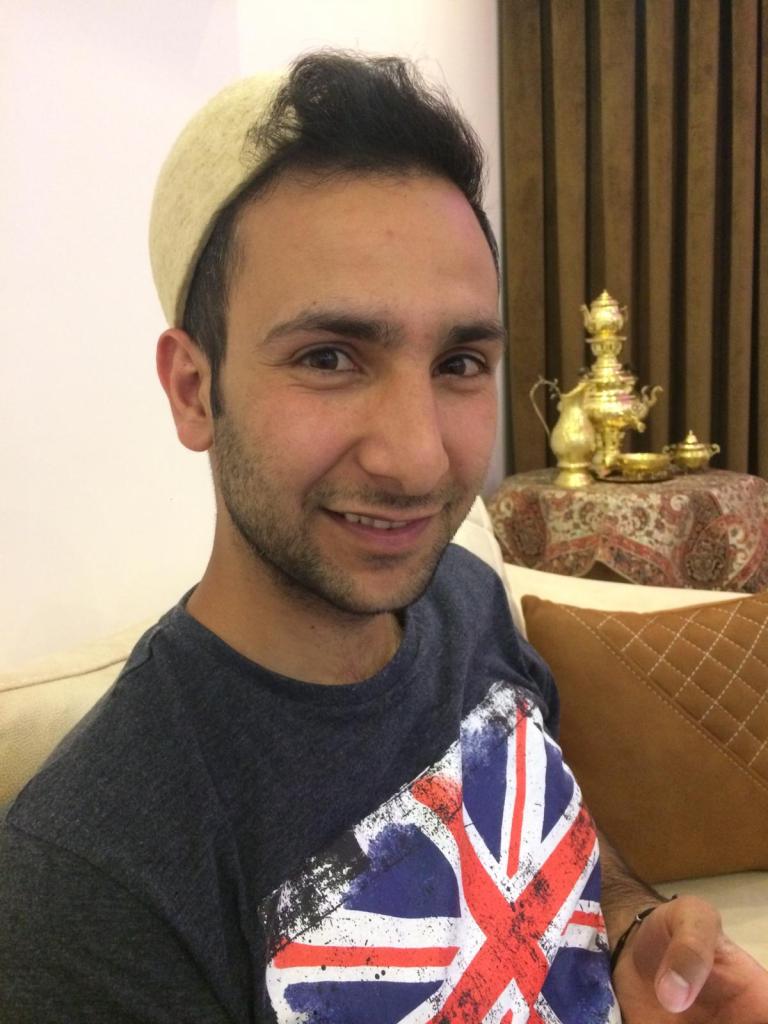
We still had a pending task, to find the egg-shaped hat, so the next stop was Rasteh Bazar, a large market in Borujerd; we parked nearby and entered an endless labyrinth of shops with roads everywhere. At one point I didn’t know where we had come from or how we were going to go out; fortunately, my boyfriend was clear about the way back, so after a long search we found the famous hat (you can see it in the photo) that, to be honest, had a strange smell.
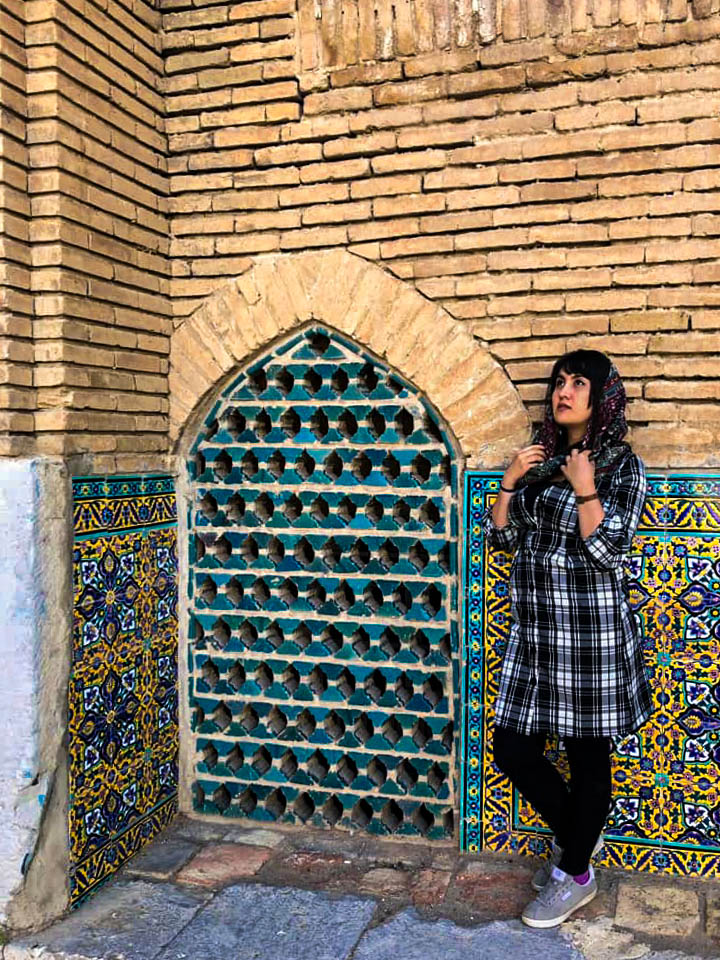
After almost getting lost in the Borujerd markets, a few steps away we found ourselves in front of this pretty Soltani Mosque, which stood out above all for the work of the tiles in its interior. They consisted of beautiful flowers in yellow, blue and dark pink that are typical in the Persian art. It was our last stop. However, returning to Malayer, we stopped one more time along the way to taste the famous Borujerd ice cream and I must say it was delicious.
1. Vennai 2. Choqa Park Hill 3. Fadak Zoo 4. Rasteh Bazar 5. Soltani Mosque
Hi guys! I’m sorry for being lost for so long, but there is a reason for that, I’ve been working on a new and improved web page with my own … Continue reading COMMUNICATION: NEW WEB PAGE
On the second day of our visit to Isfahan, we began the tour concluding the visit of the Naghsh-e Jahan square. The Shah mosque, at the south of the square, … Continue reading SIXTH STOP IN IRAN: ISFAHAN (DAY 2)
On the eighth day, we drove five and a half hours to arrive from Malayer to Isfahan, from all the eleven cities we visited in Iran this one was by far my … Continue reading SIXTH STOP IN IRAN: ISFAHAN (DAY 1)
On the
sixth day, after eating a wonderful Persian breakfast, we took another day trip,
this time to Hamedan only an hour driving from Malayer; the city is one of the
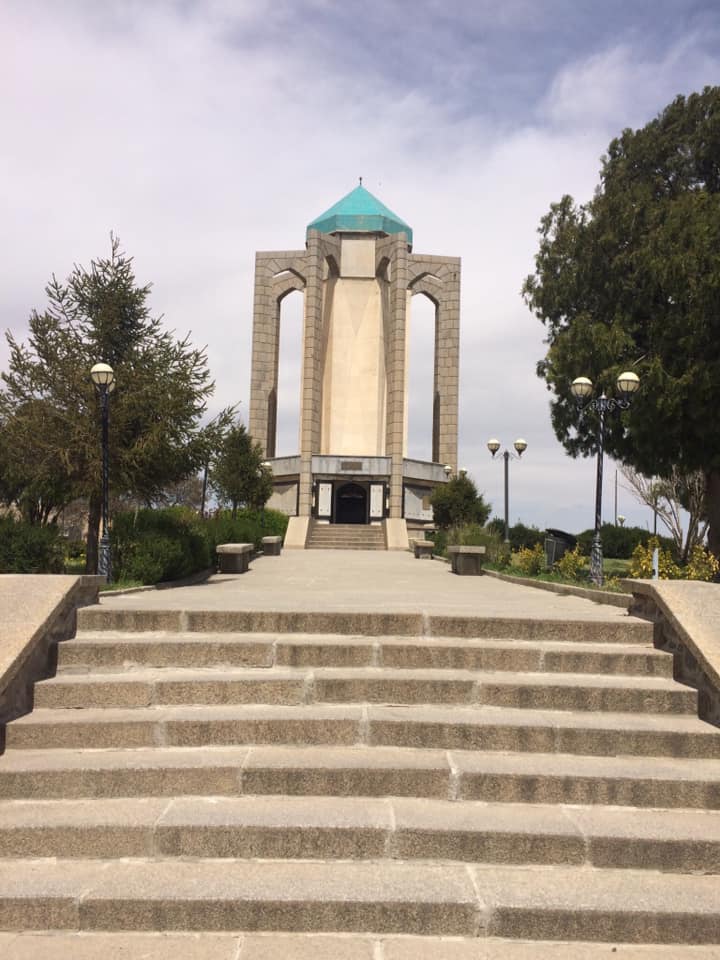
oldest ones in the world and the oldest one in Iran. We started with the tomb
of Baba Tahir, one of the most important poets in Persian literature, he was
born and lived in Hamedan, but nobody knows the exact date of his birth and death.
Inside the monument and around the tomb some of his poems (written in Hamedan
dialect) are exposed; it was a shame that I wasn’t able to read them, but I had
my personal translator boyfriend that did it for me.
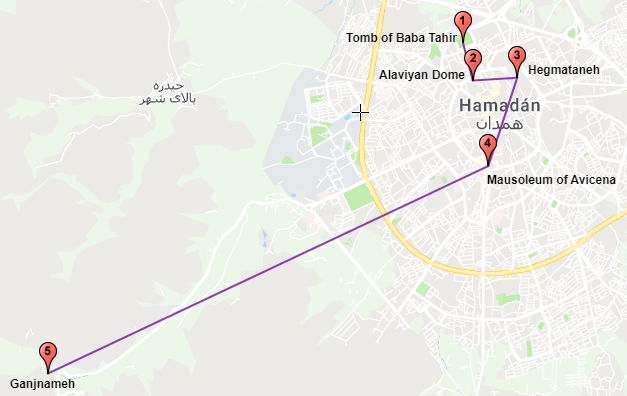
Tomb of Baba Tahir
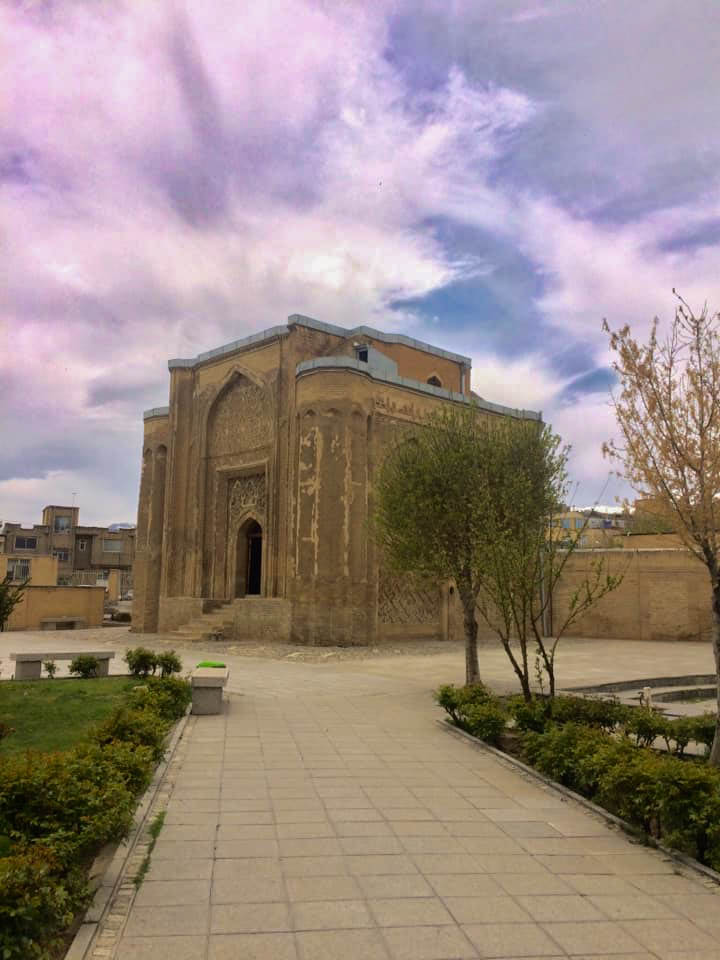
Alaviyan Dome
Mausoleum of Avicenna
Second
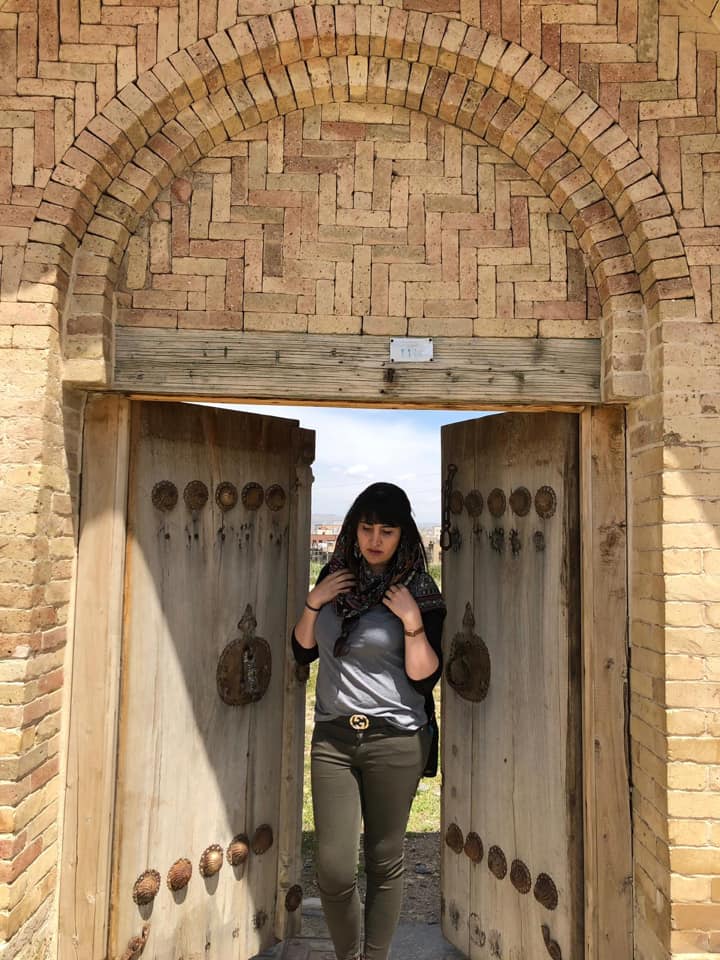
stop: Alaviyan Dome, when we arrived to the place
there was a man that sold the tickets to us, then as a kind gesture he accompanied
us to the Dome and gave us an explanation of the place (here my personal
translator was so useful); he was also so grateful to see someone from a very
far away country so interested in Iran. The place, was
initially a mosque built by de Alaviyan family
during the Seljuq era (1038-1118) and later became a family crypt.⠀⠀⠀
Third
stop: Hegmataneh, it was the ancient city of Hamedan that use to be the capital
of Iran in the 8th century BC; the 50 acres terrain contains the remains
of the city, museums, archeological areas and historical buildings. A funny
thing happened to me in this place, when we were visiting one of the museums we
met a group of 12 years old girls who were doing a school visit. At one point
we felt that they were staring at me while saying things to each other; then, one
girl came and asked: “where are you from?” I responded: “Colombia” and we
continued with our visit. However, I began to feel a little bit nervous because
they were following us all around the place; my boyfriend found out that they
had already forgot my country because the rumor was that I was from Turkey or Japan.
In addition, they began to shout at me: “hey miss, do you love me?” (My
boyfriend explained me that it was one of the only phrases they knew in English)
so I really didn’t know how to react. At the end, they wanted to ask again about
my country, as it was a general confusion on the subject.
A
similar thing happened a couple of hours later when I was waiting for my boyfriend
outside the bathrooms. A group of 6 years old girls began to gathered around me
saying a lot of things in Persian, as my personal translator wasn’t available I
had to handle the situation by myself; so I asked: “Salam, Englisi baladi?” which
means: “Hi, do you speak English?”, as a response a little girl started waving
her hand. I thought: “thank God” and ask her: “Hi, how are you?” but she just
remains in silence and then respond to me in Persian; fortunately my boyfriend
came to my rescue telling me that the girl was just at first level of English
lessons. The whole situation was so strange to me, I was feeling like a famous person,
and then I understood that those girls wasn’t used to see foreigners.
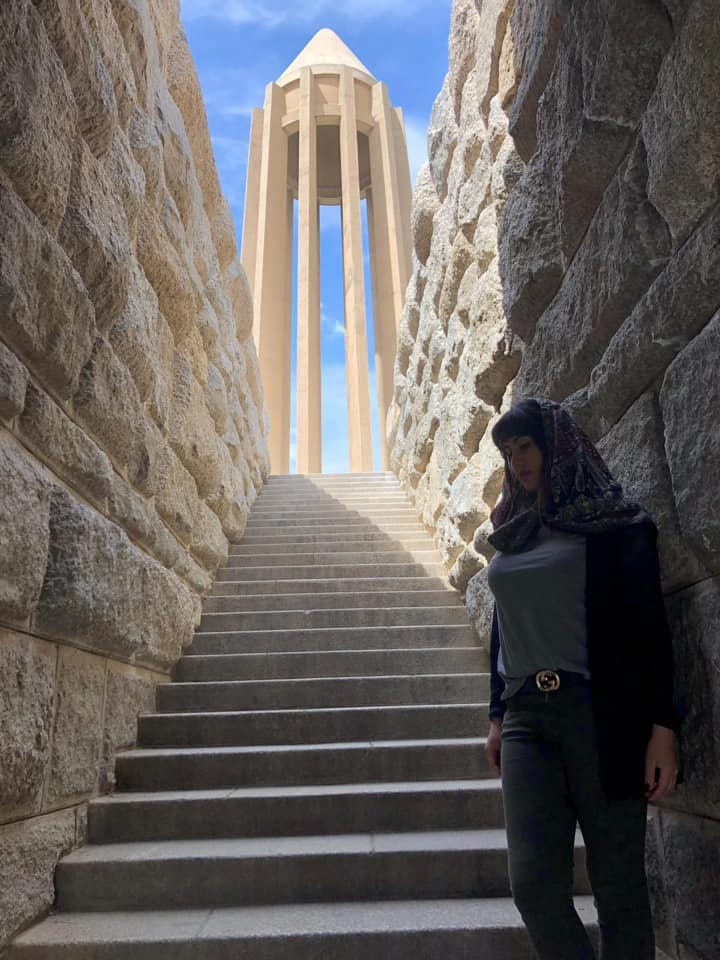
After my fifteen minutes of fame we headed out to the next place: the Mausoleum of Avicenna, a complex dedicated to the Iranian polymath Avicenna, the father of modern medicine and one of the most significant physicians, astronomers, thinkers and writers of the Islamic Golden Age. His most famous works are “The Book of Healing” and “The Canon of Medicine”. It was an amazing exposition, so interesting and educative, and the main building, the Mausoleum, a beautiful piece of architecture.
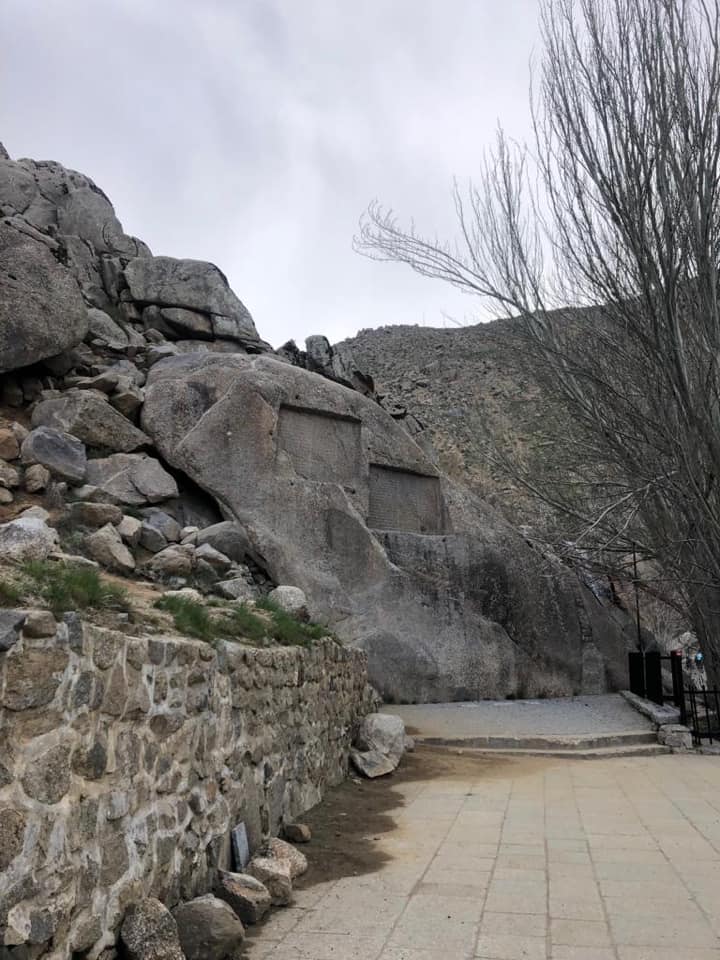
At that point we were starving, since we haven’t eaten anything since breakfast; so we went to the last site: Ganjnameh, famous for two trilingual cuneiform inscriptions (as the one we saw at Bisotun in Kermanshah) carved in stone and a beautiful waterfall. The legend says that the inscriptions reveal the place of a hidden treasure. The place was 12km away from Hamedan, so the first thing we did when we arrived was searching for some food; I tried the Persian version of pizza (living in Italy I eat a lot of pizza) and I must say it was amazing! (I know Italians won’t agree with me). Once with our stomachs full and happy we went to explore the place.
Finally,
after a very long but beautiful day, we drove back to Malayer and in the middle
of the way, the funniest thing happened! We saw a flock of sheep walking on the
middle of the street, I felt like an excited little girl watching the sheep went
by. Lastly, we arrived home and for dinner, I tried another Persian version of
the Italian cuisine: the lasagna, this one was delicious too!
Hi guys! I’m sorry for being lost for so long, but there is a reason for that, I’ve been working on a new and improved web page with my own domain that allows me to … Continue reading COMMUNICATION: NEW WEB PAGE
On the second day of our visit to Isfahan, we began the tour concluding the visit of the Naghsh-e Jahan square. The Shah mosque, at the south of the square, was the one missing from … Continue reading SIXTH STOP IN IRAN: ISFAHAN (DAY 2)
On the eighth day, we drove five and a half hours to arrive from Malayer to Isfahan, from all the eleven cities we visited in Iran this one was by far my favorite. It was late and … Continue reading SIXTH STOP IN IRAN: ISFAHAN (DAY 1)
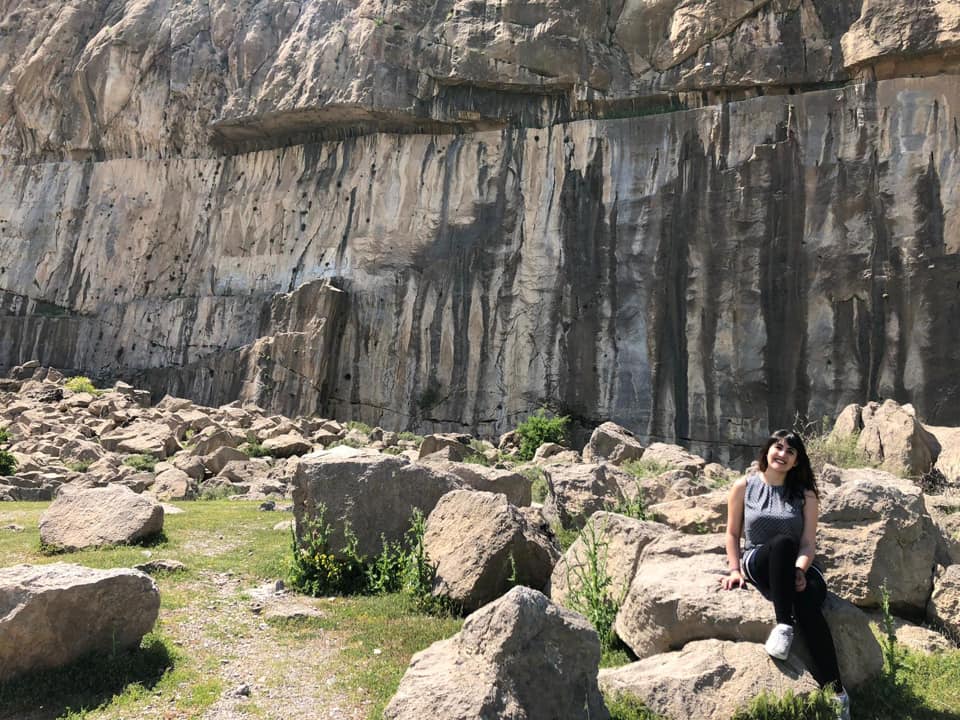
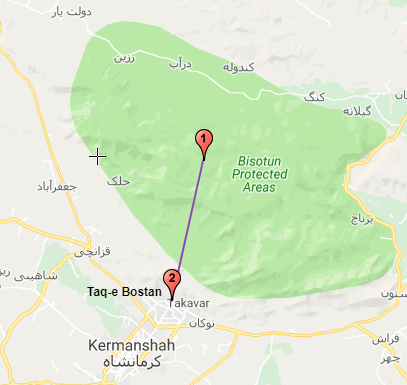
On the fourth day in Iran, we took a day trip, with my boyfriend and sister in law to Kermanshah, from Malayer, the city we were staying; it was a two hours drive to the first point: Bisotun. The arriving to this place is a little tricky, as it is an enormous protected natural area, finding the entrance is so difficult and if you pass it (as it happened to us) you must go back a long way between traffic to search it again. This place is famous because of an inscription on the wall of a cliff at 100 meters height about the achievements of Darius I of Persia before his access to the throne. The text was written in three languages: Ancient Persian, Elamiteand Babylonian using cuneiform writing, that’s why it became so important,since it allowed historians to understand this type of writing; it is the equivalent of the rosette stone for hieroglyphs.
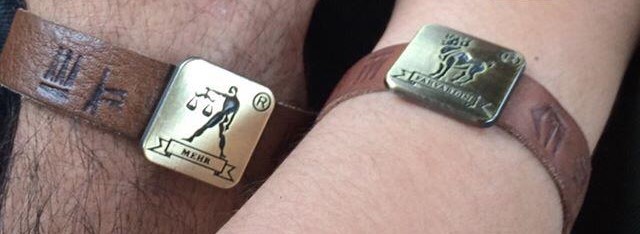
Cuneiform bracelets with our signs
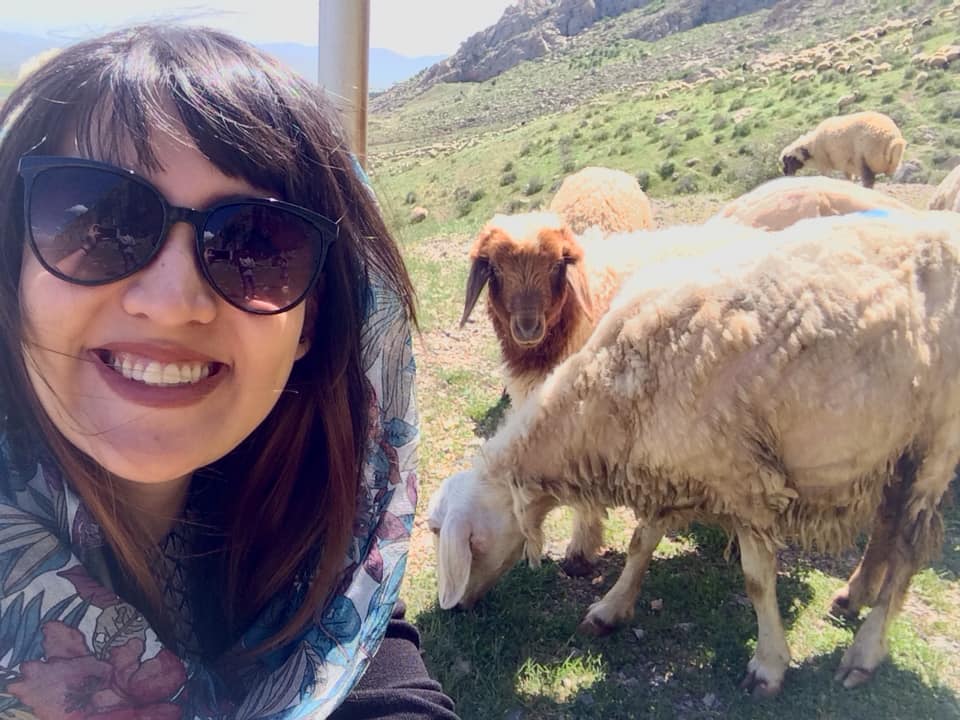
At Bisotun protected area we also met a sheep’s flock, it was the first time I could get close to a sheep so I was very excited, I managed to take a couple of selfies with them before continuing our journey. After walking around the park we were getting hungry, fortunately there was a typical restaurant inside the complex, full with Persian carpets and beautiful decorations, we seated down on the floor and enjoyed a “Halim Bademjoon” made with eggplant and a “Tabe Kabab” with meat.
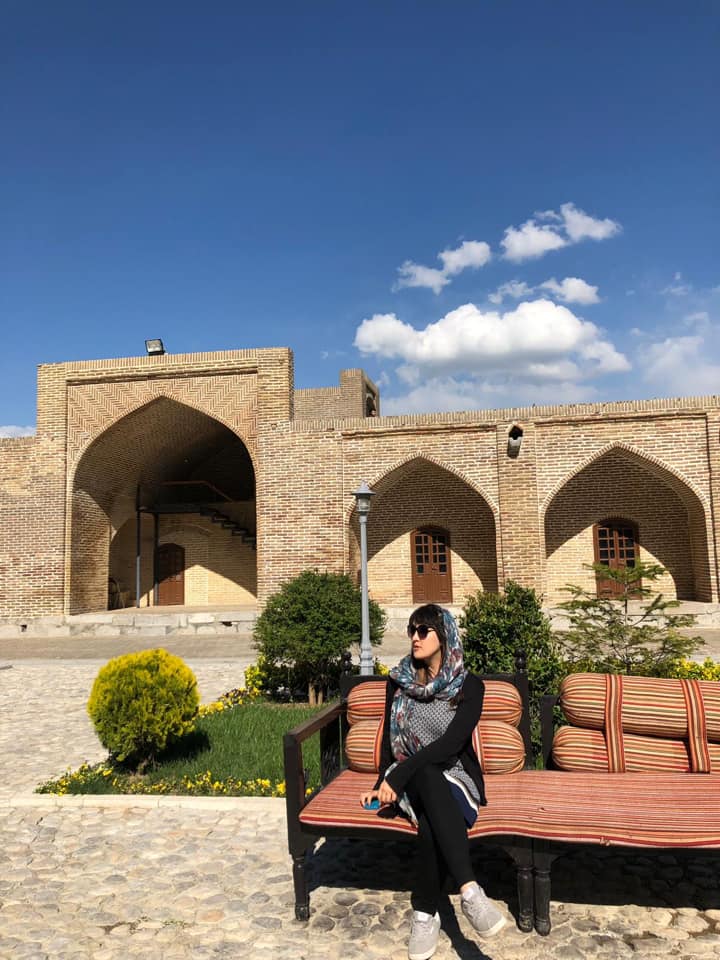
At the end of the visit, we entered to the Karvansaray hotel (inside the protected area) to admire the beautiful inner courtyard, in the past, hotels of this type were used by horse or camel travelers who needed to rest one night before continuing their journey.
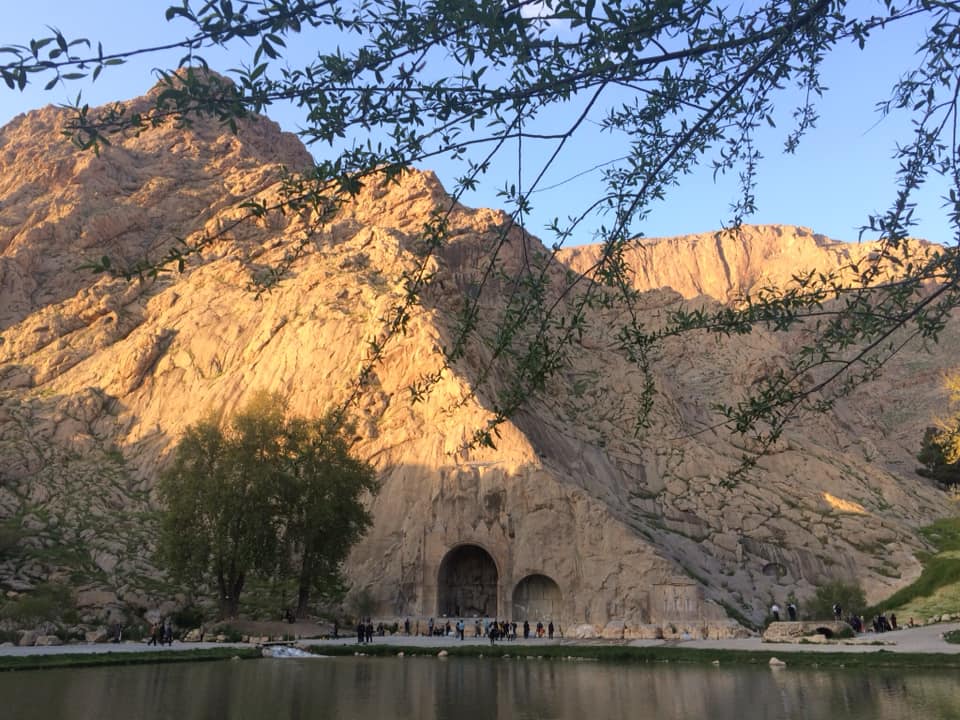
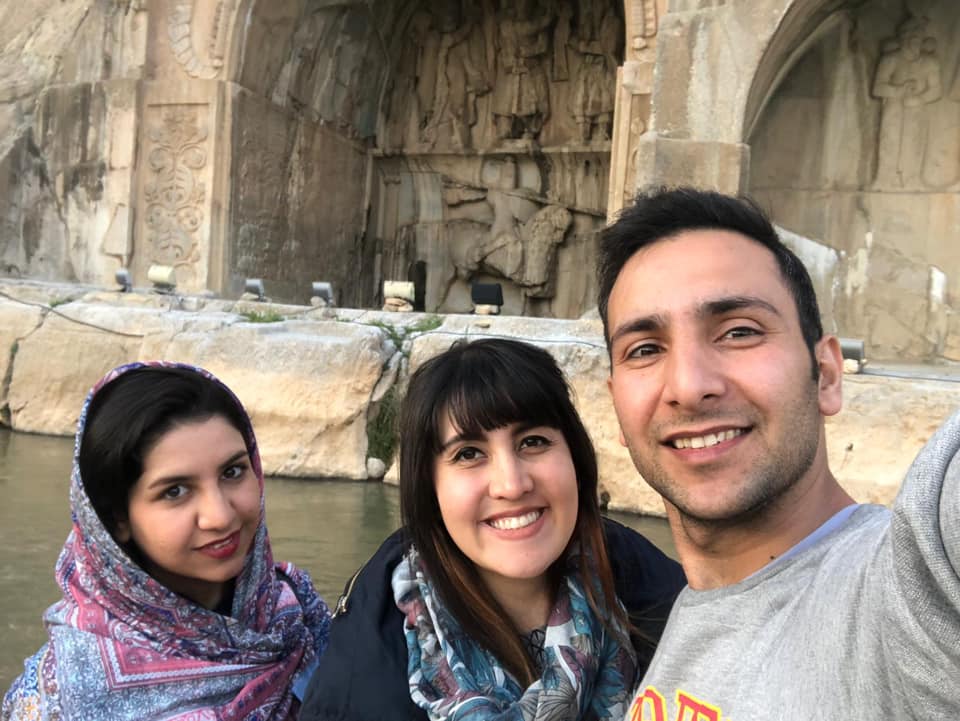
Our secondplace to visit was Taq-e Bostan; its name literally means “Arch of the Garden” or “Arch made by stone”, is an archaeological park with a series of rock relieves carved on the stone from the era of Sassanid Empire of Persia (around the 4th century AD), about the achievements of Ardashir II and ShapurIII. The details were so beautiful and the stonework was in a great conservation state. For closing the day, we went to a restaurant nearby, where they had transparent cabins above the floor level, with a Persian carpet inside, and in which you could smoke shisha and drink tea, while listening to a traditional bagpipe show. Finally, we drove back to Malayer and took dinner at home.
Hi guys! I’m sorry for being lost for so long, but there is a reason for that, I’ve been working on a new and improved web page with my own domain that allows me to … Continue reading COMMUNICATION: NEW WEB PAGE
On the second day of our visit to Isfahan, we began the tour concluding the visit of the Naghsh-e Jahan square. The Shah mosque, at the south of the square, was the one missing from … Continue reading SIXTH STOP IN IRAN: ISFAHAN (DAY 2)
On the eighth day, we drove five and a half hours to arrive from Malayer to Isfahan, from all the eleven cities we visited in Iran this one was by far my favorite. It was late and … Continue reading SIXTH STOP IN IRAN: ISFAHAN (DAY 1)
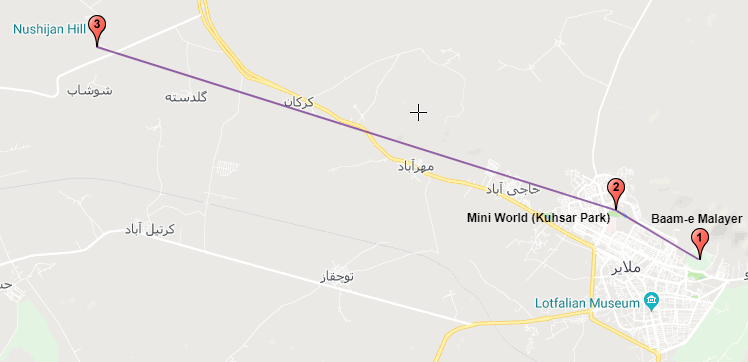
Nushijan Hill - Mini World (Kuhsar Park) - Baam-e Malayer
A car took us in 6
hours from Tehran to Malayer on the morning of the third day; we arrived to my
boyfriend’s house where all his family was waiting to know me for the first
time. They received me with all their love and kindness; even if the
communication was difficult (they only speak in Persian, so my boyfriend had to
translate everything to me), I could feel they were so happy for us to be there
together. It was already lunchtime, so his mom cooked my favorite Persian food
“fesenjoon” and it tasted like heaven.
After an amazing
introduction to my family in law, we took the car, went to eat some Iranian ice
cream and headed to the first stop: Baam-e
Malayer, the highest point of Malayer from where you can see the entire
city; the lookout area also has an artificial waterfall, a restaurant and the
possibility of renting a hookah at night. Later, we went to see an attraction
called: Mini World, inside of Kuhsar
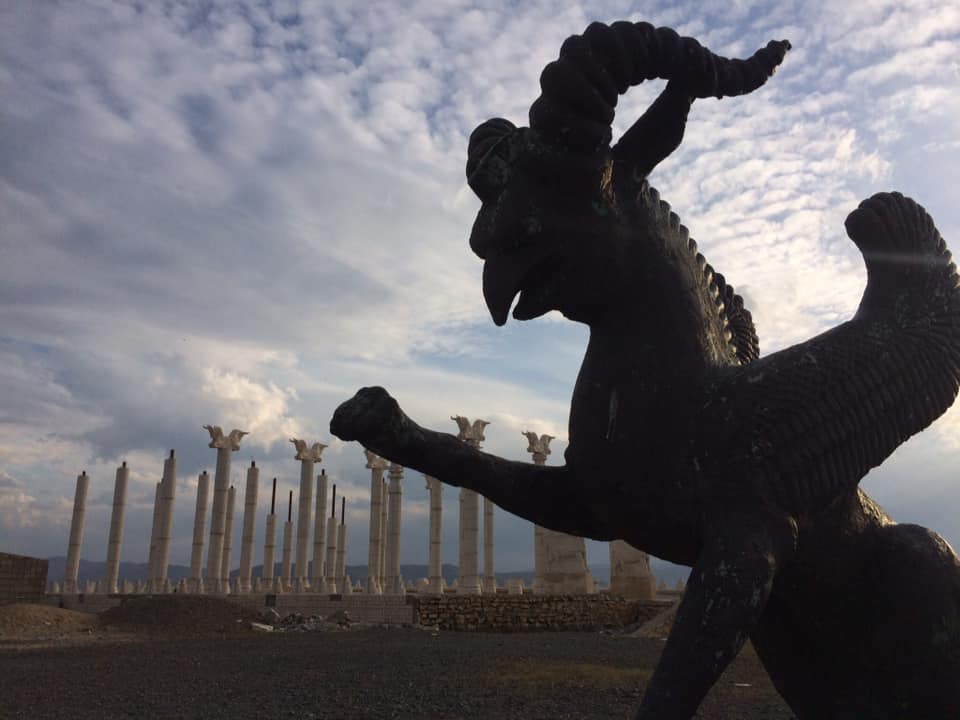
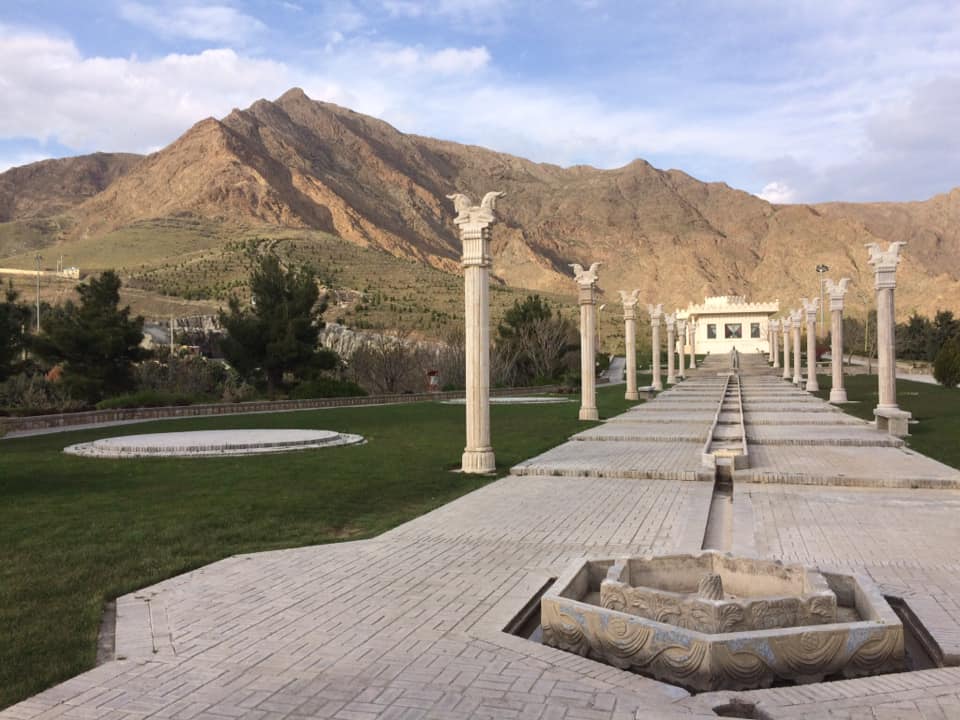
Park.It’s basically a reproduction
of different famous world monuments but in a small version, the park is still
in construction, but we were able to see the Eiffel Tower, the Parthenon,
Persepolis, Si-o-se Pol Bridge, the Hafez mausoleum, the Leaning Tower of Pisa,
and other Persian sites. Kuhsar Park is also famous for being the place where
Persian families go to picnic in summer.
Both, Baam-e and Mini World were restructured a few years ago as part of a plan by
Malayer’s administration for bringing tourist to the city and creating a direct
highway on the north of the city for inhabitants to arrive to the center. I
enjoyed both places, the first one for the incredible view and the second one
for its cultural content.
As we were so tired
for our early trip from Tehran to Malayer, we decided to leave the last place
for another day. On our fifth day in Iran, we majorly did family visits and in
each house we were fed, I don’t know how I managed to eat all that food, maybe
because it was so delicious. In addition, my boyfriend’s sister-in-law make me
up since I was fascinated with the Iranian girl’s makeup.
In the middle of one
visit and another, we took a little ride, 20km north from Malayer, to the last
place: Nushijan Hill, an antic
multi-storied fort on top of a 37 meters hill. Built with mud-brick it is considered
the oldest building in the world of its type; it dates between 723 and ±220 BC
although it was only found in the year 1967 as a result of an excavation. Almost
no tourist knows this place, so the fort was practically empty and that’s why I
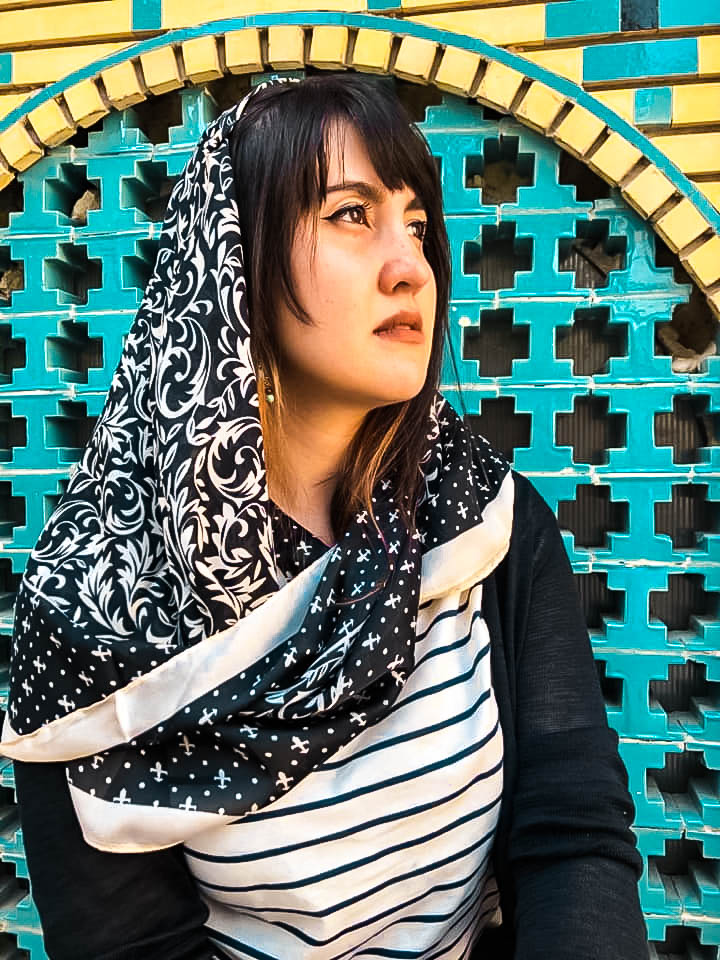
could take a picture without having to cover my hair.
1. Baam-e Malayer 2. Mini World (Kuhsar Park) 3. Nushijan Hill
Hi guys! I’m sorry for being lost for so long, but there is a reason for that, I’ve been working on a new and improved web page with my own domain that allows me to … Continue reading COMMUNICATION: NEW WEB PAGE
On the second day of our visit to Isfahan, we began the tour concluding the visit of the Naghsh-e Jahan square. The Shah mosque, at the south of the square, was the one missing from … Continue reading SIXTH STOP IN IRAN: ISFAHAN (DAY 2)
On the eighth day, we drove five and a half hours to arrive from Malayer to Isfahan, from all the eleven cities we visited in Iran this one was by far my favorite. It was late and … Continue reading SIXTH STOP IN IRAN: ISFAHAN (DAY 1)
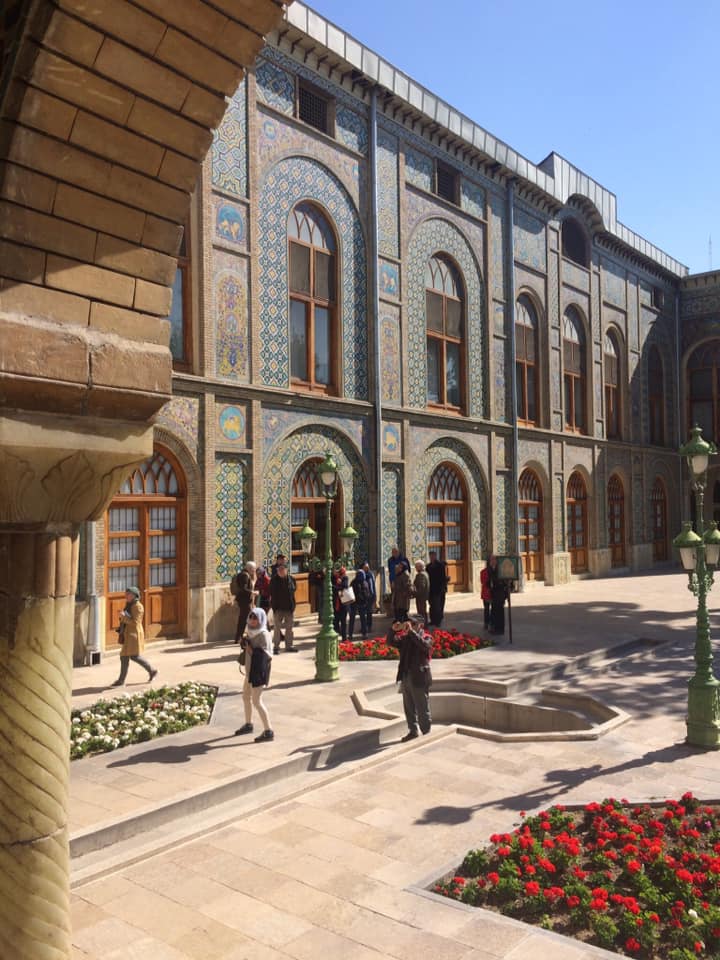
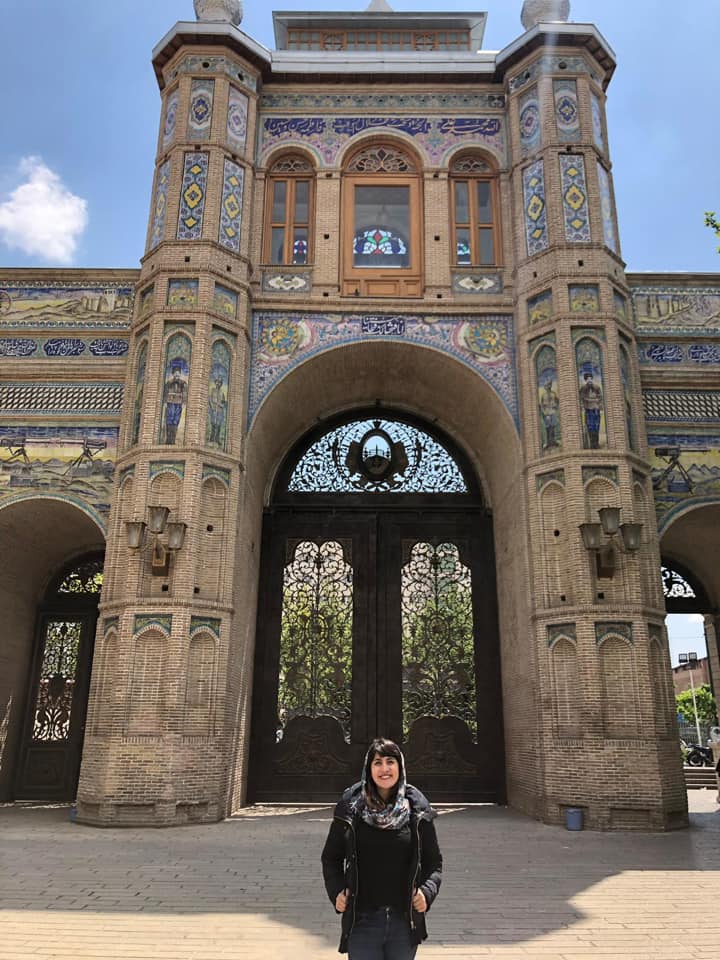
The day after the flight, we woke up early, put the scarf on my hair and went out to discover Tehran. A taxi took us to the first place: the Golestan Palace (chosen by the UNESCO as World Heritage), a palace complex used as royalty residence by the Qajar dynasty that is compound by different buildings constructed on different epochs. The beauty is that each palace has its own particularity; one of them had the interior entirely covered by little pieces of mirrors. As it was a complex, it took us whole morning to see it all, after that, we had “kabab” for lunch (the restaurant was almost empty, so I took advantage to uncover my hair for a while) and continued with the visit.
Near the Palace, there
was the National Museum of Iran on
walking distance, so we took a quick peak inside just to take the picture (we
hadn’t enough time to visit the exposition). However, in order to arrive there,
we needed to cross a principal street, I didn’t expected that it would be like
an impossible mission; the traffic in Iran is crazy! The cars never stop, so
you must cross in the middle of them.
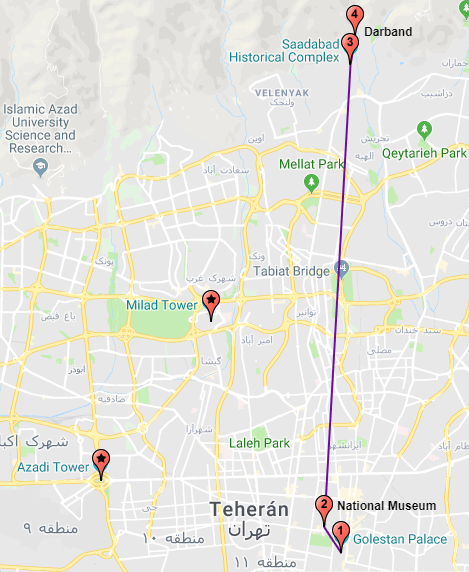
National Museum of Iran - Sa'dabad Palace - Darband
The next stop was the Sa’dabad Palace, all across the city; it took us some time to arrive. It was similar to the Golestan Palace, but much bigger, is a 300-hectare complex with natural forest, streets, galleries, palaces and museums. The Qajar and Pahlavi monarchs built the palace as their residence. When we arrived, there was also a little food and candy fair, typical from different regions, we bought a delicious pomegranate juice, a candy made with a mixture of nuts and “baklava” a dessert pastry with chopped nuts held together with honey.
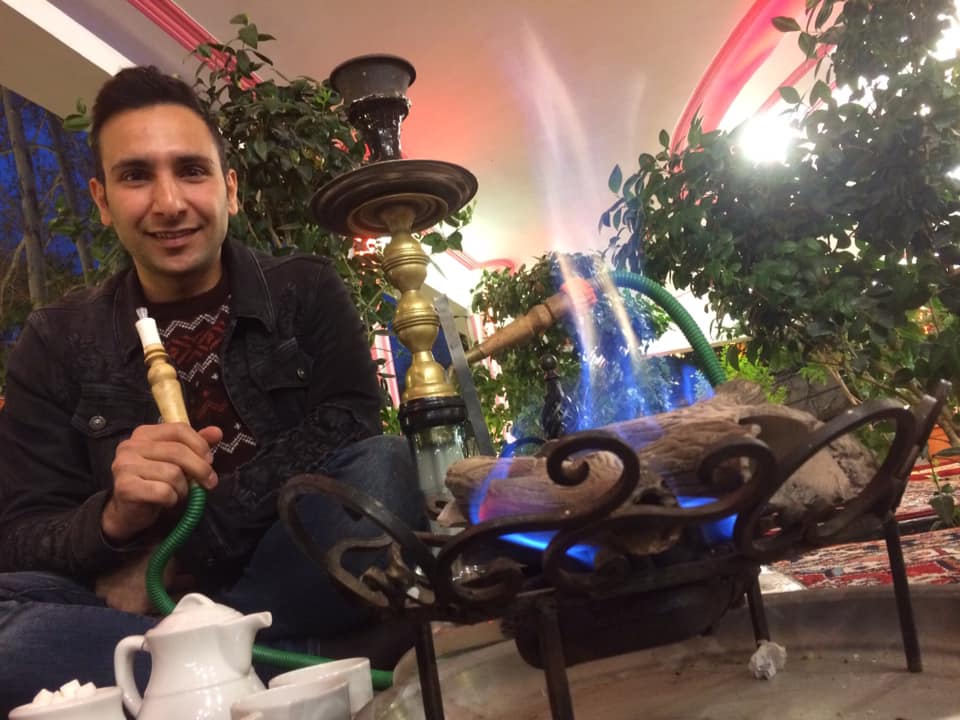
The last stop was my favorite: Darband, a neighborhood located at the beginning of a hiking trail into Mount Tochal (the world Darband literally means: door of the mountain), along the way up there were several cafes and restaurants giving the face to a river that passes under them. We began to go up searching for a restaurant that we like the most and on our way, we found a man who sells fortune cards, the cute thing was that the one who choose the card was a canary, I really didn’t like what my card said, but the canary was so cute.
We finally found our
restaurant and it was so romantic, being there with the person that I love
touched me profoundly; the sound of the river passing underneath us, the
colored lights that illuminated us, because it was getting dark, and the
artificial fire they set up so we wouldn’t felt cold made the perfect atmosphere.
We were sitting on a platform with a carpet on it (of course); we drank some
tea, smoked some shisha and ate some typical dishes enjoying our time together;
it was the perfect closure of our Tehran trip.
1. Golestan Palace
2. National Museum
3. Sa'dabad Palace
4. Darband

We took this rout on our 2nd day Iran trip knowing Tehran. Unfortunately, we couldn’t saw all the beautiful things that this city has to offer, so I mark for you another two places that you totally must see, we hope to visit both on our next trip.

* Azadi Tower
* Milad Tower
Hi guys! I’m sorry for being lost for so long, but there is a reason for that, I’ve been working on a new and improved web page with my own domain that allows me to … Continue reading COMMUNICATION: NEW WEB PAGE
On the second day of our visit to Isfahan, we began the tour concluding the visit of the Naghsh-e Jahan square. The Shah mosque, at the south of the square, was the one missing from … Continue reading SIXTH STOP IN IRAN: ISFAHAN (DAY 2)
On the eighth day, we drove five and a half hours to arrive from Malayer to Isfahan, from all the eleven cities we visited in Iran this one was by far my favorite. It was late and … Continue reading SIXTH STOP IN IRAN: ISFAHAN (DAY 1)
On the fifth day, we made a day trip to Borujerd (is one hour by car from Malayer); two things we had in mind for absolutely doing in this city: search for a particular egg-shaped … Continue reading FIFTH STOP IN IRAN: BORUJERD
On the sixth day, after eating a wonderful Persian breakfast, we took another day trip, this time to Hamedan only an hour driving from Malayer; the city is one of the oldest ones in the … Continue reading FOURTH STOP IN IRAN: HAMEDAN
It all began one year ago when, as aresult of a series of casualties, I met my Iranian boyfriend. We end up workingtogether in a cosmetic shop in Rome by the summer of 2018 and it turns out thatwe already had common friends and we both live in Milan, but for some strangereason we haven’t met before; I’m convinced that things just happen in theright time, when you’re ready for them.
So, I began with the basics, learningsome words in Persian, tasting their delicious food and attending to theirfestivities; at the edge of the 7th month we decided to take theleap and go to meet his country, I was so excited with the possibility ofknowing his family and his roots. Once the decision was made, we started allthe requirements so I could visit the county:
Applying for a tourist Visa: this was the hardest part; we got an appointment online and arrived to the embassy all confident with the necessary documents, next thing we knew: my Visa was rejected (and I had already paid for the fee). I was so sad thinking that I could never know my boyfriend’s background. As a Colombian, the requirement was to apply through a travel agency, but nobody had informed us about that, so fortunately we found a very good agency from Iran that provides us with a code, with that (and a new payment at the embassy), I was able to have my Visa in a week.
Doing the Luggage: I ask my boyfriend help for choosing the most suitable clothes for our trip, it came out that nothing in my closet was appropriate. Therefore, I had to buy some clothes, they should cover my arms, legs, neckline and butt and, in addition, I should find something to cover my hair. This rules are only effective on the street, if you are at home you can have more open clothes, but it always depends on how religious is the family which you’re staying with (fortunately for myself, my boyfriend’s family: not religious at all)
Accommodation: This one is a little tricky, in Iran is forbidden to book the same room for a not married couple (if one of them is Iranian); luckily for us, in all of the cities that we were going there was some relatives who could accommodate us without sleeping in separate rooms.
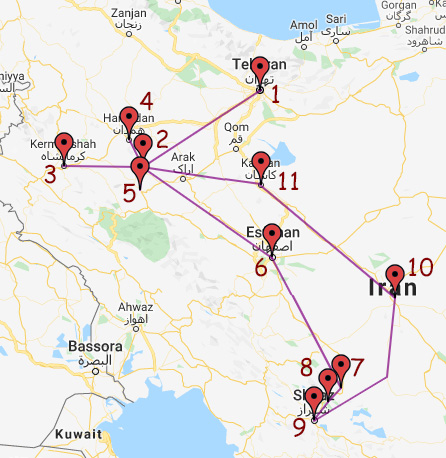
Afterall that, we finally managed to make the trip, taking a flight directly from Milanto Tehran, Iran’s capital. It was a five hours flight and we arrived at night,from the airport we took a Snapp (something like Uber) to the house we werestaying, the next morning we began our 16-day trip around 11 cities.
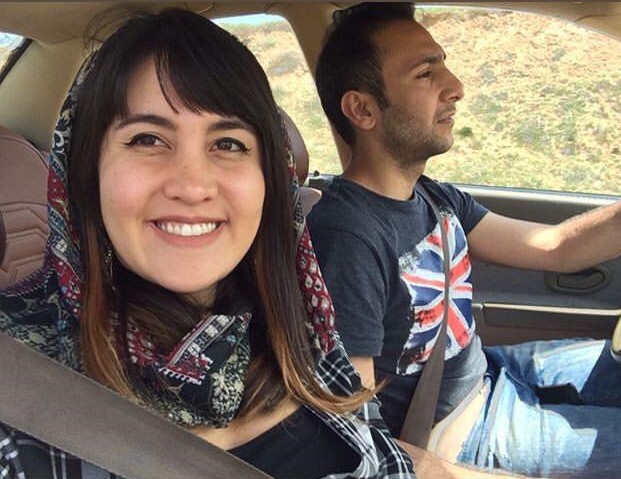
At Tehran, we’ve been moving by taxi, butsince we arrived to Malayer (my boyfriend’s city) it was easier doing the travels by car, taking into account thatall the cities were nearby. The road trips were so fun; we prepared a memorydrive with our favorite’s songs, that we sang and danced all the way, and a bagwith snacks for eating when we were feeling hungry; the funniest thing wasseeing, from time to time, groups of sheeps crossing the streets. On my nextpost, you will find information from the insights of each city and a bonus oneabout the amazing Persian food (I publish every weekend).
Well,what can I say about Iran? I really enjoyed it! The people there are so kindand the country is not dangerous at all (like some people think). It isincredible the amount of beauty that this country has on every detail; most ofthe ceilings, for example, are geometrically designed with the “moqarnas chiseling”technique emulating a honeycomb. I must come back to see the rest of thecountry because it really worth the visit.
However,I must also say that not everything was perfect. Sometimes it was a littledifficult for me feeling that I had to hide myself on the streets because, as awoman, I didn’t had the same rights; most of all, in the hot cities where Imust remain with all those clothes that I had on me (so I recommend nottraveling on a hot season). The bathrooms were also a challenge, as most ofthem were latrines that I was not used to (little Tip: always check the lastcabin, you can find a normal bathroom in there, and bring your own toiletpaper). Nevertheless, you need to understand that is a different culture, soyou won’t feel comfortable with all of it, but the rest part is so amazing thatdealing with these little difficulties it’s not that bad.
THINGS I LEARNED AND SOME EXTRA TIPS
I loved the food and how they have a whole tradition around it: Sitting on the floor, on a Persian carpet, they put all the food in the center so you can take whatever you want and at the end, when you are so full that you can’t stand up, you say “nushejan” (the Persian word for enjoy your meal) and drink some tea with cookies (I know more food) or maybe smoke some shisha.
If you can, travel with a local, a lot of people only speak in Persian, so the communication will be easier, plus you can take advantage of some discounts if your friend can convince others that you are Iranian as well (Iran is so cheap, but if you’re Iranian is cheaper). However, spend some money on your stay; right now, the economy is not doing well.
There’s no Visa or Mastercard connection in Iran, you won’t be able to use your debit or credit card; bring cash and exchange it for the local currency. The exchange office in the airport is more expensive, so change a little bit there and the rest in the city.
Be careful crossing the streets, there are no traffic lights or crosswalks, so the task can become an impossible mission.
A Persian person cannot live without three things: a carpet, some tea and a shisha.
As soon as I got into the public transport to arrive to my 9/5 job, I had the same feeling of each day, the thought that life could not be just that… Passing 3 to 4 hours in traffic, being … Continue reading HOW THE JOURNEY BEGAN?
Is scary, I am not going to lie, you are leaving everything behind, literally EVERYTHING, you arrive to a strange country, with a different language, different food, with zero friends and all of your family is back home. It doesn’t … Continue reading HOW IT WAS STARTING FROM ZERO?
Is scary, I am not going to lie, you are leaving everything behind,
literally EVERYTHING, you arrive to a strange country, with a different
language, different food, with zero friends and all of your family is back
home. It doesn’t sound so good, right? However, if I am completely honest with
you, it is very exciting! Why? Just imagine that your life becomes a white
canvas, nobody knows the old you… you can be whoever you want and do whatever
you want, the perfect way of learning about yourself and finding wherever you
were searching.
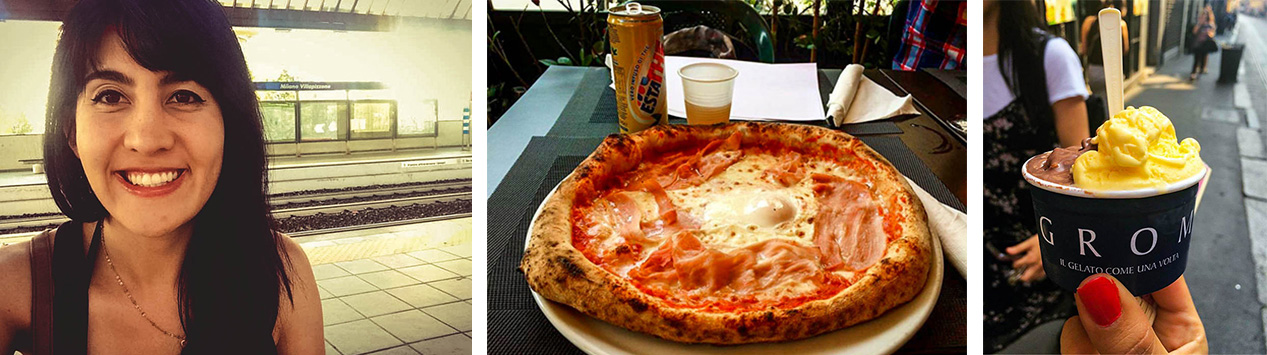
So here I was, my first day in Milan, waiting for the train (that was something
new for me). I started with the basic stuff: getting a transport card and a
sim-card (I suggest ILIAD, the others will charge you more), tasks that were a
little bit challenging because I was trying to make coherent Italian phrases from
what I remembered from my Italian classes. Then, I went for food: I ate my
first “real Italian Pizza” and my first delicious “gelato”. Finally, I took a Hop-on Hop-off bus (that was a goodbye
gift from my boss) and went on a tour to know the city, I found it very
instructive; most of all I loved the Duomo, the Vittorio Emanuele gallery, the
Sforza castle and the Gae Aulenti square.
On my way, I have discovered that here they eat enormous quantity of
pizza (a personal portion is a whole pizza). That “aperitivo” is a cocktail with all the food you can eat. That one
croissant and a coffee makes a breakfast (that you must eat standing up). Moreover,
that the birthday person is the one who brings cake for everyone (that one
doesn’t convince me yet).
But living in Milan is not only about knowing the Italian culture, since
it is a very international city; I have made new friends from different
countries, and I have experienced and learnt about other cultures. I have
attended to the Iranian New Year (Nowruz), ate Indian food with my hands with
Indian friends, learned how to toast in Hungarian and went to a Greek birthday.
It is incredible how being open to new experiences can teach you, the
acceptance that there are different cultures outside there, different types of
view and even different inclinations, makes you a completely different person,
more respectful and more aware. I have grown a lot in these three years living
abroad, as I’ve been opening my comfort zone I’ve been also learning a lot
about myself and I am immensely grateful for that.
After some weeks, you will miss your family and friends, yes, but you
can still talk to them; eventually, they will come to visit, and it will be
even more exciting to show them all the things that you have learnt, the new
food that makes you crazy and the little cozy libraries that you enjoy. So, if
I can give you a last little advice: enjoy as much as you can and never stop
traveling, because we only live once and this world is too big to explore.
IMPORTANT ADITIONAL TIPS IF YOU ARE
PLANING TO LIVE IN ITALY:
Try not to
mention, to an Italian, your culinary experiments with the Italian food (they
are so picky when it comes to their food) don’t say that you put chicken or
ketchup into pasta and please never say that you love pineapple on pizza.
If you are
a huge Halloween fan, this is not the right place to go, is not a major
celebration here, people not even use costumes at all. However, if you still
want to wear a costume, you can wait until February, put on a mask and a
Victorian dress and go to Venice.
Searching
house is difficult and the rent is expensive; so I suggest you to begin the
research as soon as possible; but, do not wire money to anybody, wait until you
are here and you can actually see the house.

 Pao's Journey