اصفهان
On the eighth day, we drove five and a half hours to arrive from Malayer to Isfahan, from all the eleven cities we visited in Iran this one was by far my favorite. It was late and we were hungry so we stop on a restaurant along the way, it was a small place with nothing in particular but Oh my! It was the best Kabab I ever tasted, so flavored! I even learned how to eat it mixing pieces of bread, some leaves of mint and a little piece of meat; my boyfriend explained me, that they make only one type of food, so that’s why they become masters in that. After that, we arrived to our destination: a family friend house where we could recharge our energies for the next two days.
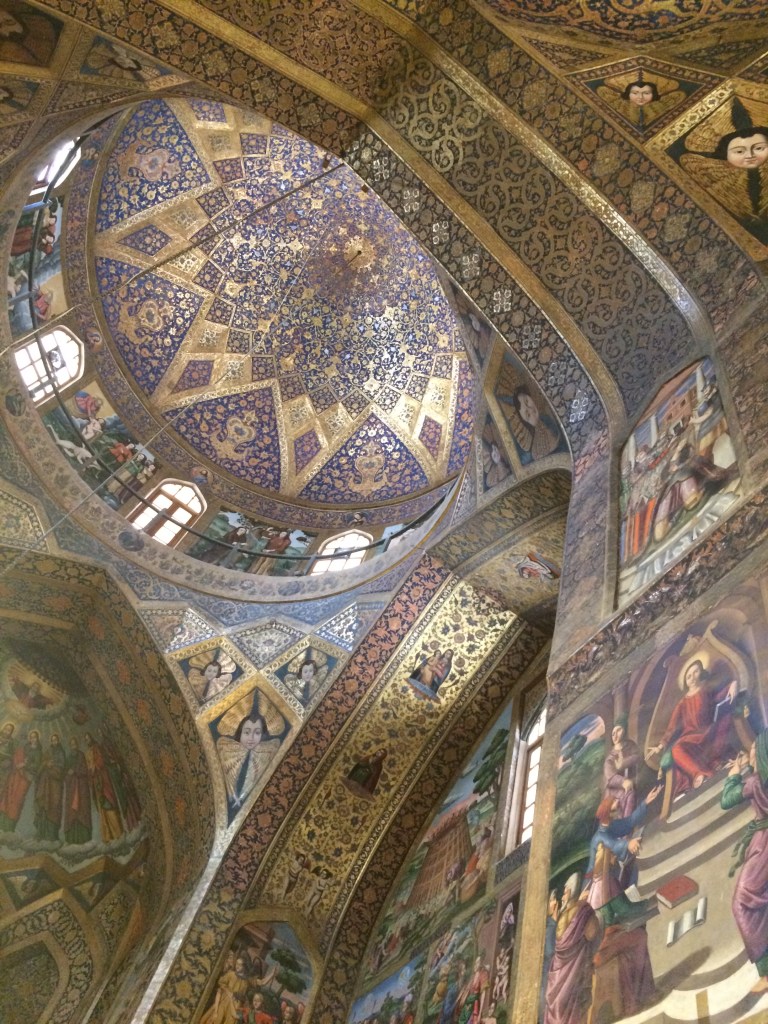
The next morning, we began the tour with Vank Church, a religious complex with a library, a museum and a cathedral that was built in 1606 by hundreds of thousands of Armenians that were forced to leave their home country during the Ottoman war. The interior of the church is covered by blue and gold frescos about the biblical story of the creation and the expulsion of the men from Eden. Other than the interior of the church, I was very impressed by an item exposed in the museum: a hair in which somebody had written with a diamond tipped pen a part of the bible, which was possible to read only by microscope.
“To know wisdom and instruction; to perceive the words of understanding”
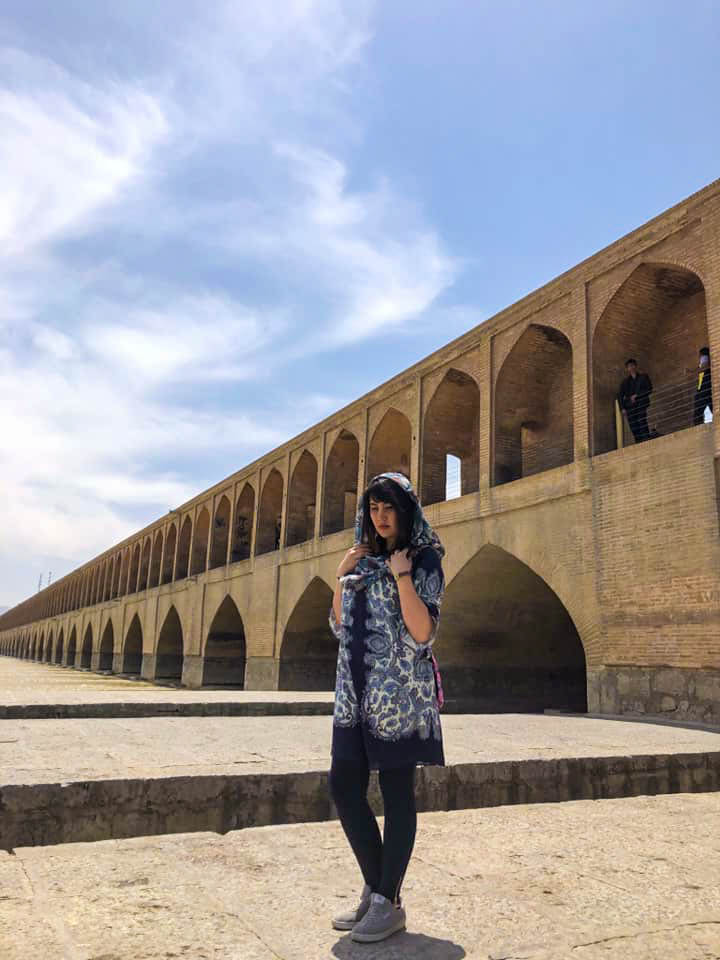
Second stop: Si-o-se Pol Bridge, its name literally means “33 arches” that are the number of arches that this bridge has, it is the largest between the bridges that cross the Zayanderud River and it is also a dam. If you remember, we had already seen the small version of it on the second stop in Iran at the Malayer Mini World.
The bridge is a popular recreational gathering place, several groups of friends settle down in the niches under it, to talk and pass the time with some shisha.
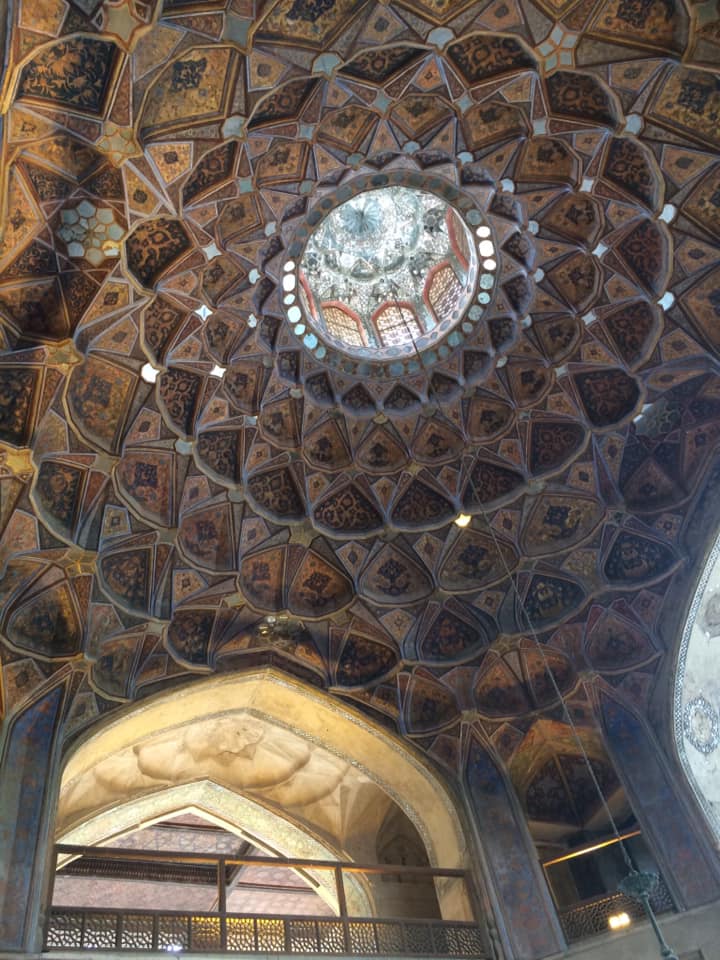
After a quick stop for eating lunch near the bridge, we drove to Hasht Behesht, a private pavilion built for the eight Shah of Iran. The name of the palace means “eight paradises” as a representation of the Islamic cosmology, seeing that incredible geometry, makes me believe that surely paradise must be something like that.
The best part was the astonishing ceiling, geometrically designed with the “moqarnas chiseling” technique that emulates a honeycomb.
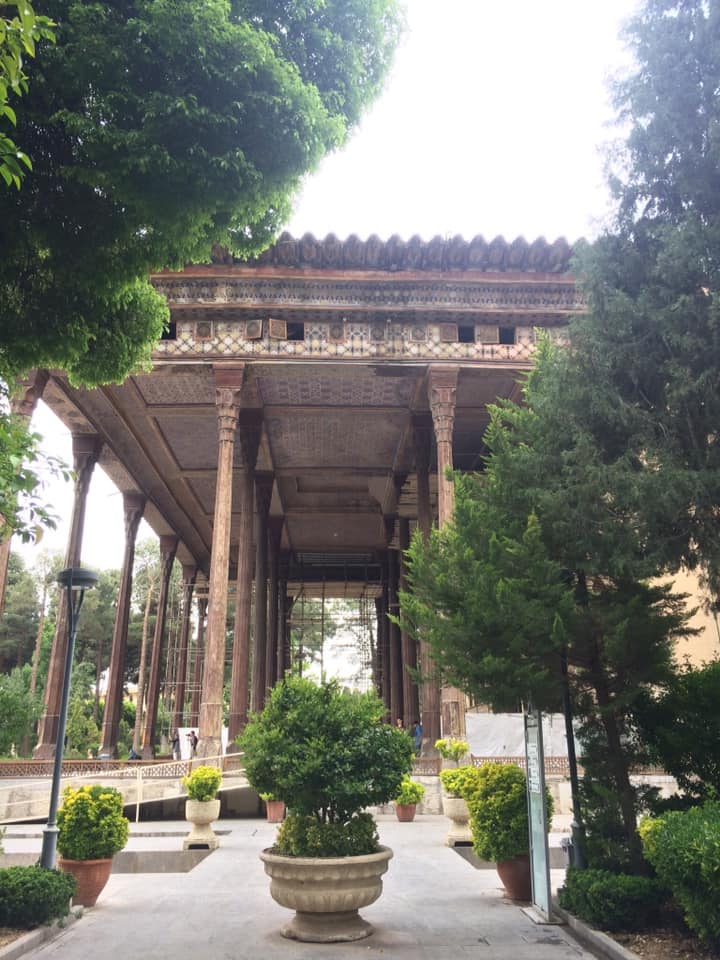
It turns out that we were near another beautiful place, so we went by walking to Chehel Sotoon Palace, another pavilion in the middle of a park at the end of a big water pond. The Shah Abbas II used it for doing receptions and entertain others dignitaries and ambassadors.
The name of this place has also a hidden meaning: “Forty Columns”. As you can see in the picture, the entrance of the pavilion is supported by twenty columns; which getting reflected in the water pond becomes forty.
Another amazing thing of this place were the frescos in the inside ceilings that represents different battles.
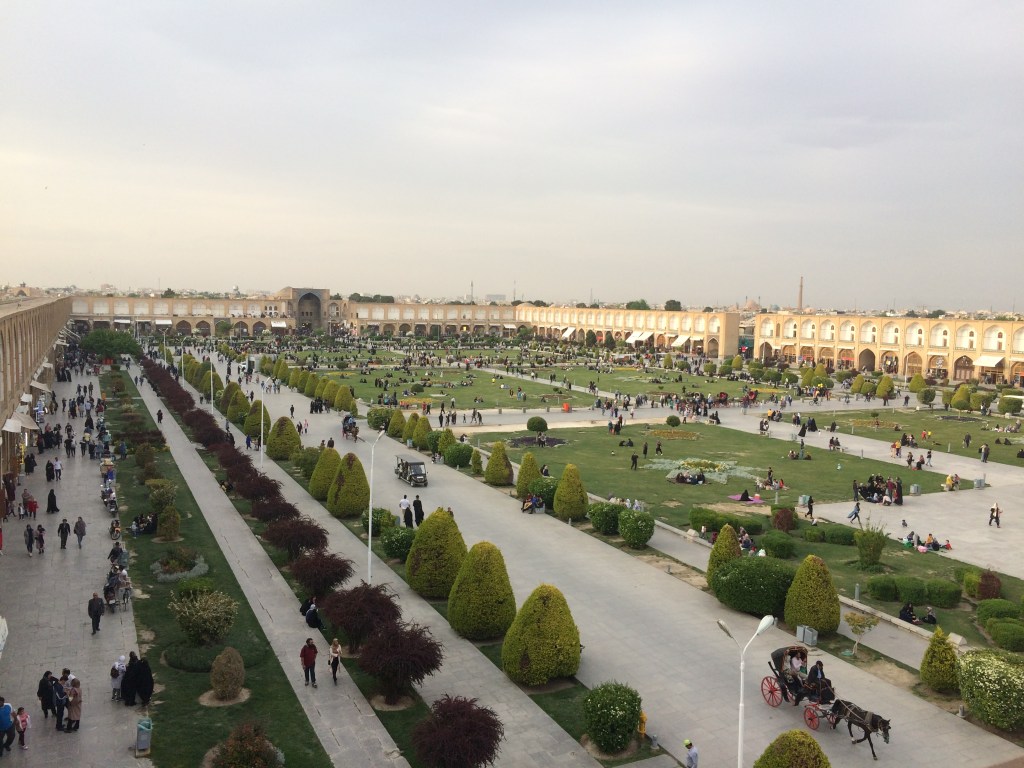
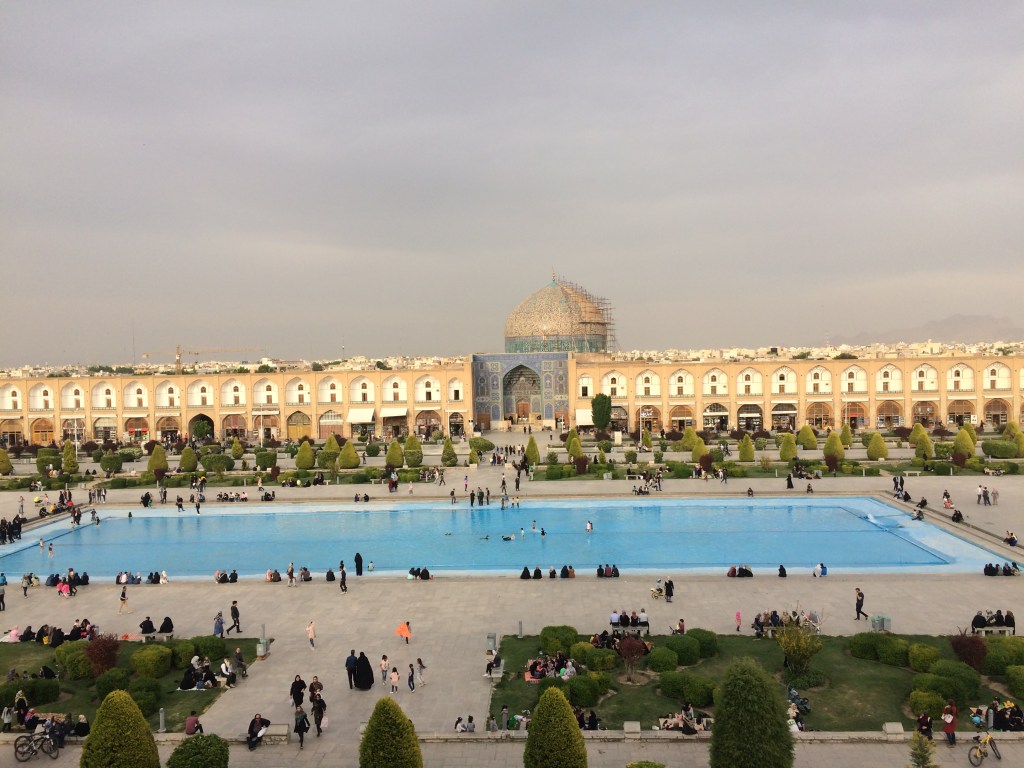
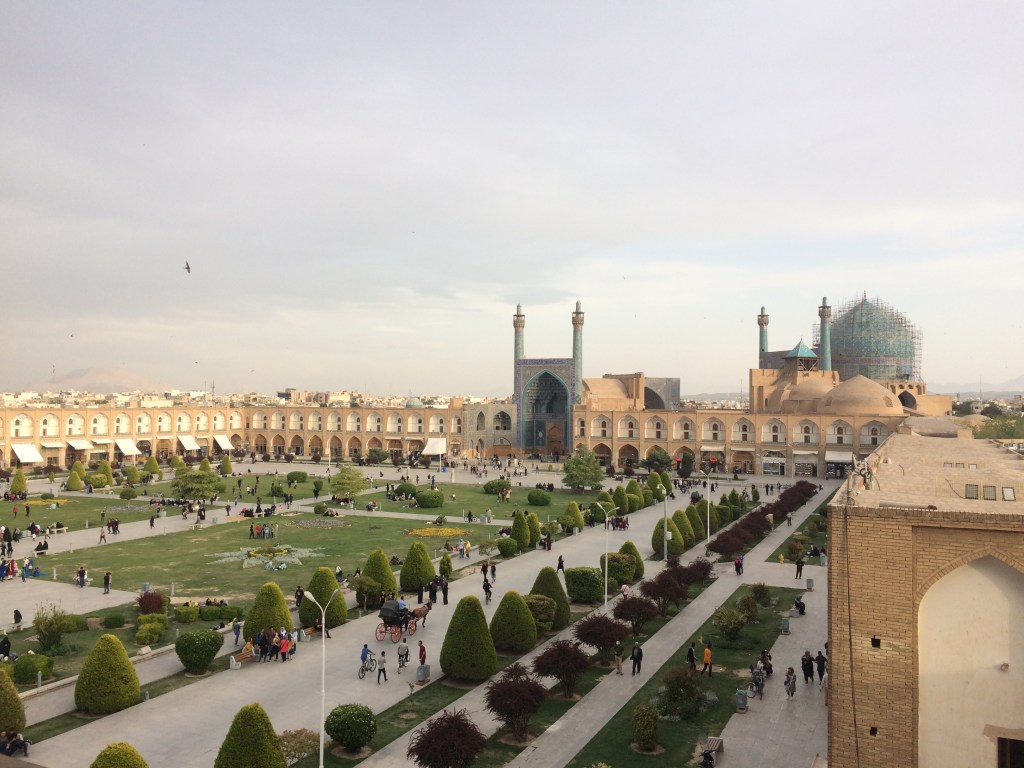
Also in a walk distance, we could arrive to the next stop, my favorite place of the city: the Naghsh-e Jahan square, the biggest square in Iran and one of the biggest in the world (89,600 square meters). Historical buildings surround it and in the middle, it has a big water pond and green areas. On the south, there is the Shah Mosque, on west the Ali Qapu Palace, on the east the Sheikh Lotf Allah Mosque and at north the Isfahan Grand Bazaar.
It is the perfect place to buy your Isfahan souvenirs as it is also delimited by shops with typical products; I bought a little tiny carpet bookmark and some magnets.
Once we admired this beautiful square, we wanted to enter to each one of the historical buildings, but it was getting late so we only got to see three of them and left the last one as the first thing to do the next morning.
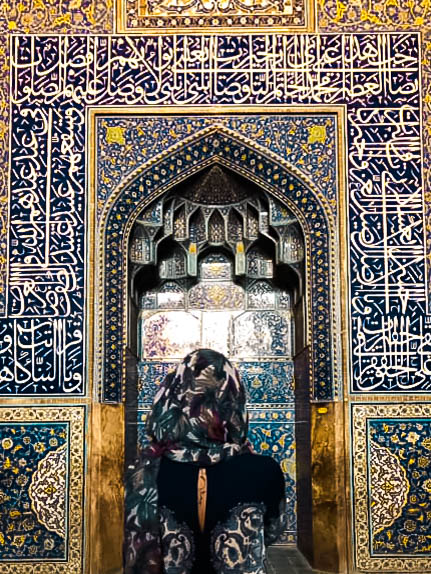
First one: the Sheikh Lotfollah Mosque constructed during the Safavid Empire in 1619 as a private mosque to the royal court. As soon as we entered, we saw this beautiful niche in the center of the back wall; it’s the Mihrab, the place where the Imamjome (a certified religious person) guides the prayer. Around it, the tiles signed the names of the 12 imams (the descendants of Mohamad).
The inscriptions on the others walls recite poems by Shaykh Bahai who prays for the help of the immaculate fourteen (Muhammad, Fatima, and the Twelve Imams). While the inscriptions inside the dome emphasize the virtues of charity, prayer and honesty and the correctness of Islam over other religions.
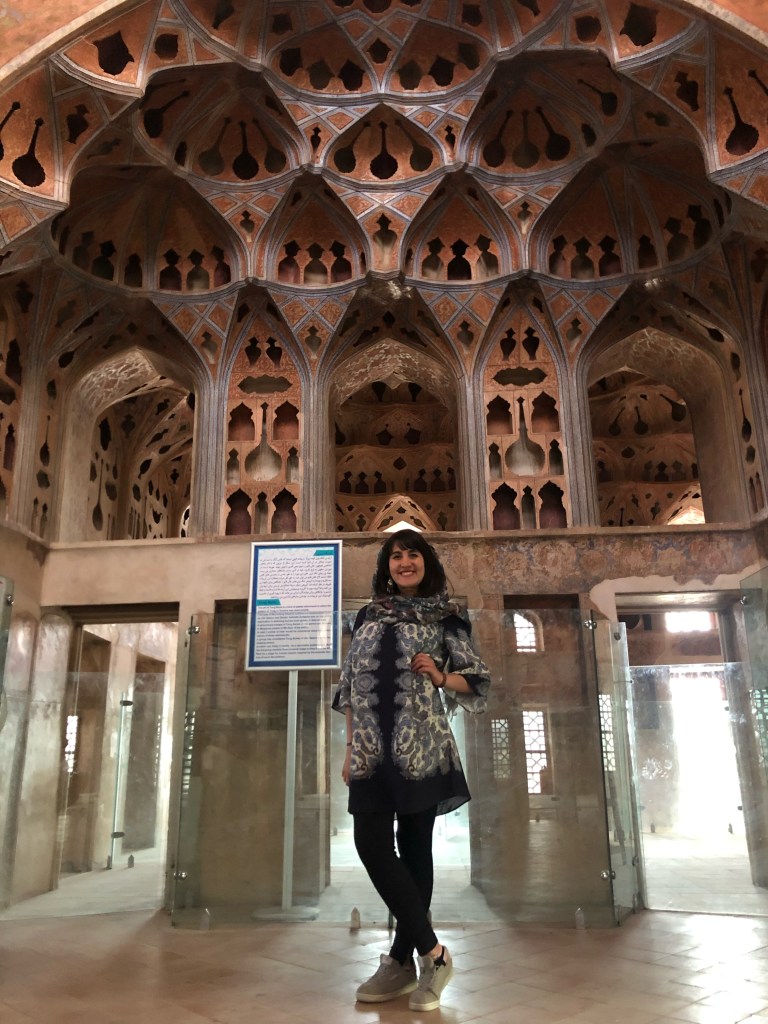
Second building of the square: the Ali Qapu Palace, we were so lucky with this one. A group of schoolgirls was trying to enter with a guided tour, so we joined them and managed to entered even if it was already closed, for free and with a guide (it was in Persian but I had my personal boyfriend translator with me).
The name of this palace means: “imperial gate” because of its vast portal in the main façade, used to entertain noble visitors, and foreign ambassadors. It has six floors accessible by a difficult spiral staircase; but arriving to the last floor is totally worth it as you can appreciate the Music Hall (the one in the picture), the design of the ceiling and walls improve the acoustic of the room.
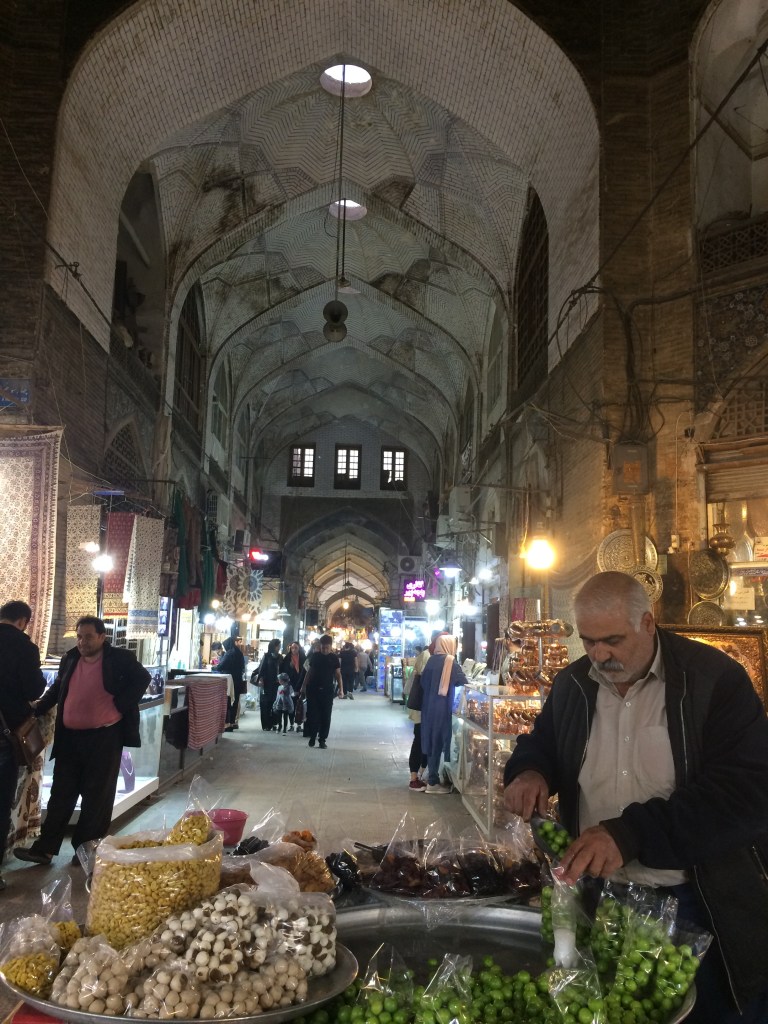
Third one: the Isfahan Grand Bazaar, built in 1620 is the longest covered market in the world, with a two-kilometer street that connects the old city with the new. Its main commercial activity is the selling of carpets and kilim; of you haven’t found your souvenirs yet, this is place won’t disappoint you, as you can find a lot of typical products.
We took a walk inside and admired all those beautiful handmade creations, finishing our square visit for the day; we eat a delicious corn snack nearby and headed to the last place of our first day in Isfahan.
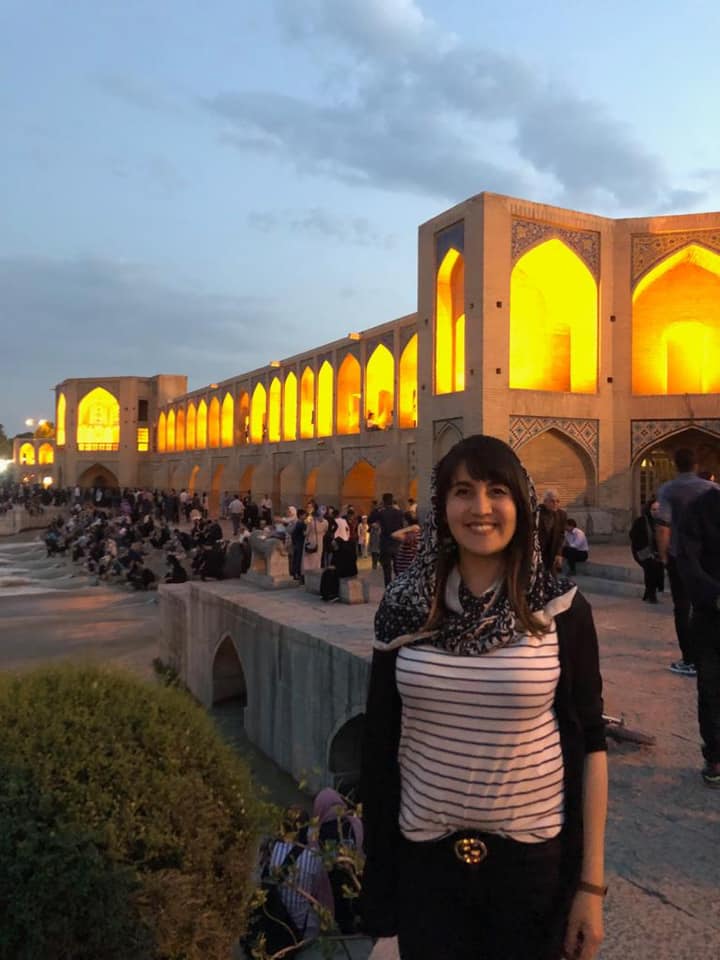
At last, a little tired but still wanting to see the Isfahan amazing places, we arrived to the Khaju Bridge, as the Si-o-se Pol Bridge it also cross the Zayanderud River and works as a dam; linking the Khaju quarter with the Zoroastrian quarter.
What I enjoyed the most about this bridge was that at night the people gathers under the arches to sing Persians songs, it was a beautiful experience, even though I couldn’t understand the words, the rhythm just got inside me. A perfect closure for the first day in a majestic city.
PS: This picture is really from the second day, but we liked this Bridge so much that we decided to come back on the next day.
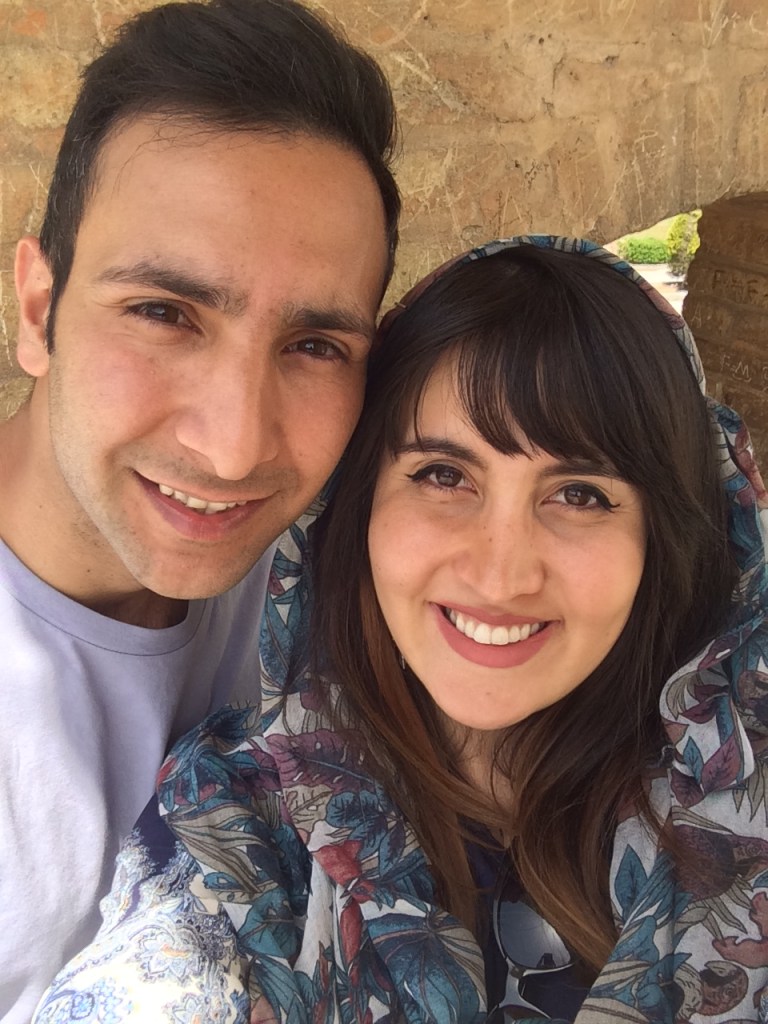
Si-o-se Pol Bridge 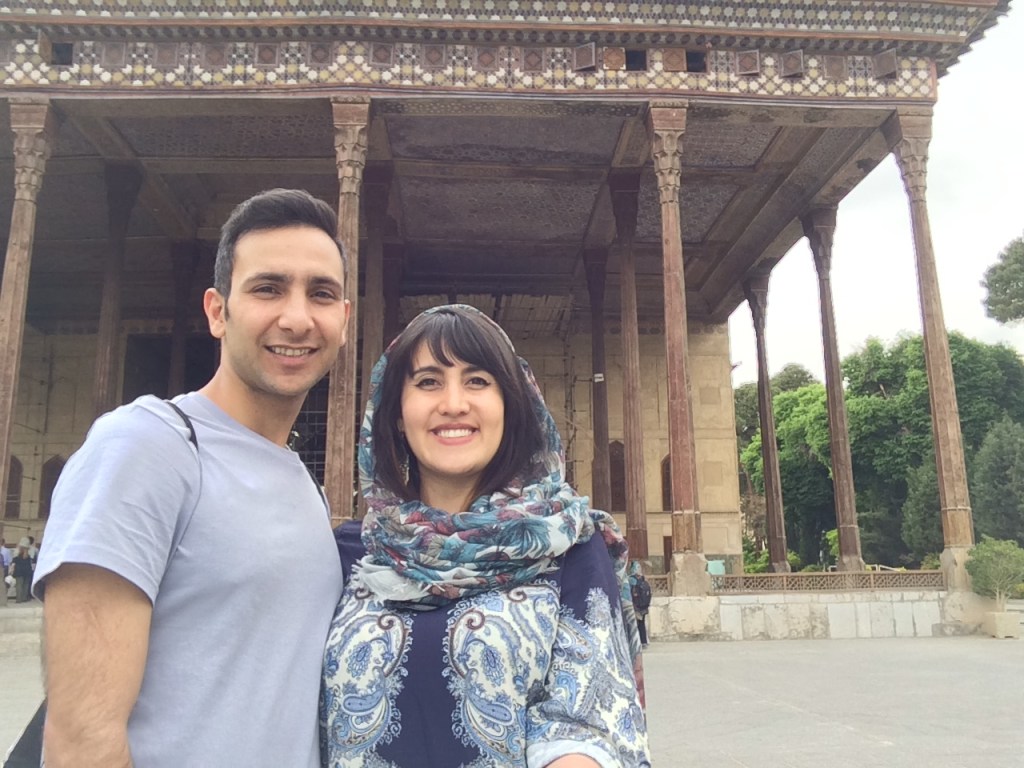
Chehel Sotoon Palace 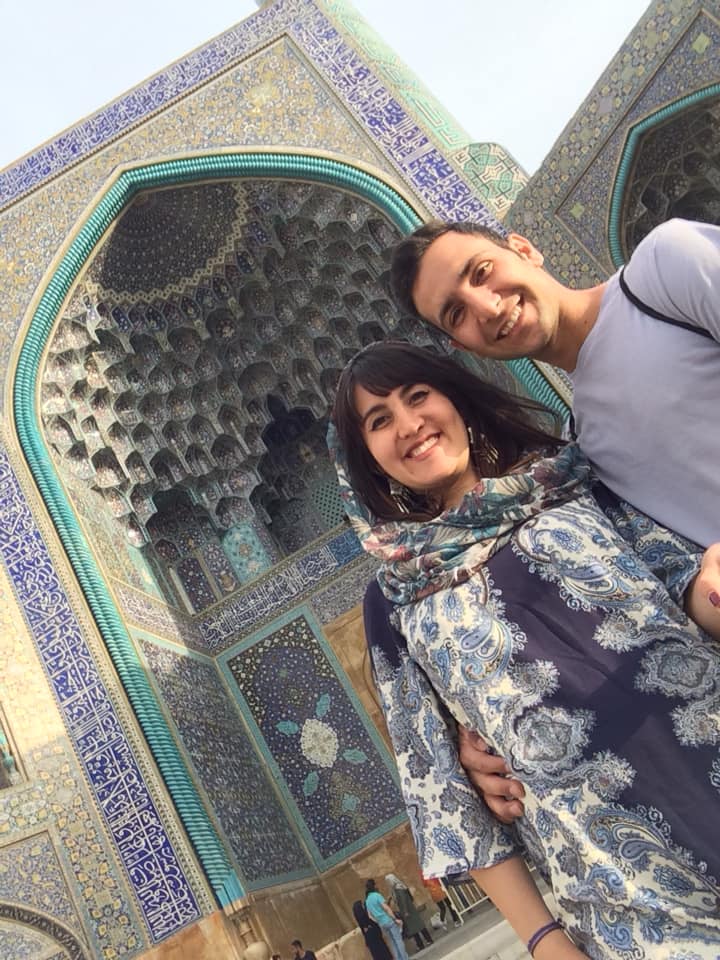
Sheikh Lotfollah Mosque
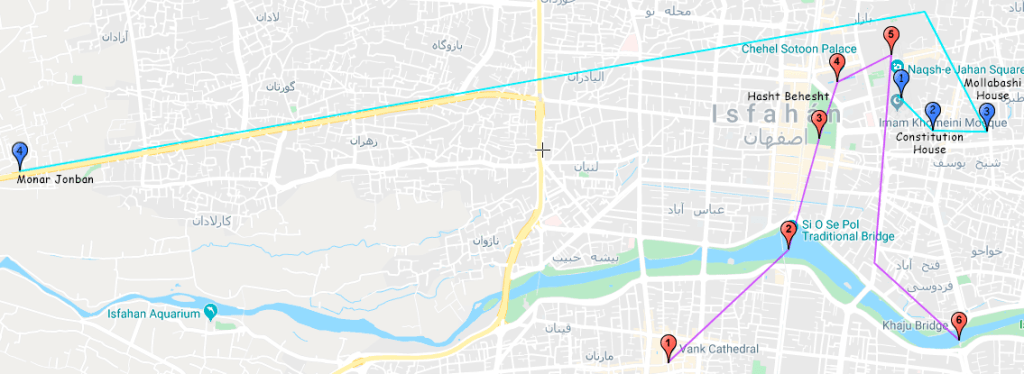
First Day (red):
- Vank Cathedral
- Si-o-se Pol Bridge
- Hasht Behesht
- Chehel Sotoon Palace
- Naqsh-e Jahan Square
- Sheikh Lotfollah Mosque
- Ali Qapu Palace
- Isfahan Grand Bazaar
- Khaju Bridge
Latest Posts:
- COMMUNICATION: NEW WEB PAGEHi guys! I’m sorry for being lost for so long, but there is a reason for that, I’ve been working on a new and improved web page with my own … Continue reading COMMUNICATION: NEW WEB PAGE
- SIXTH STOP IN IRAN: ISFAHAN (DAY 2)On the second day of our visit to Isfahan, we began the tour concluding the visit of the Naghsh-e Jahan square. The Shah mosque, at the south of the square, … Continue reading SIXTH STOP IN IRAN: ISFAHAN (DAY 2)
- SIXTH STOP IN IRAN: ISFAHAN (DAY 1)On the eighth day, we drove five and a half hours to arrive from Malayer to Isfahan, from all the eleven cities we visited in Iran this one was by far my … Continue reading SIXTH STOP IN IRAN: ISFAHAN (DAY 1)
 Pao's Journey